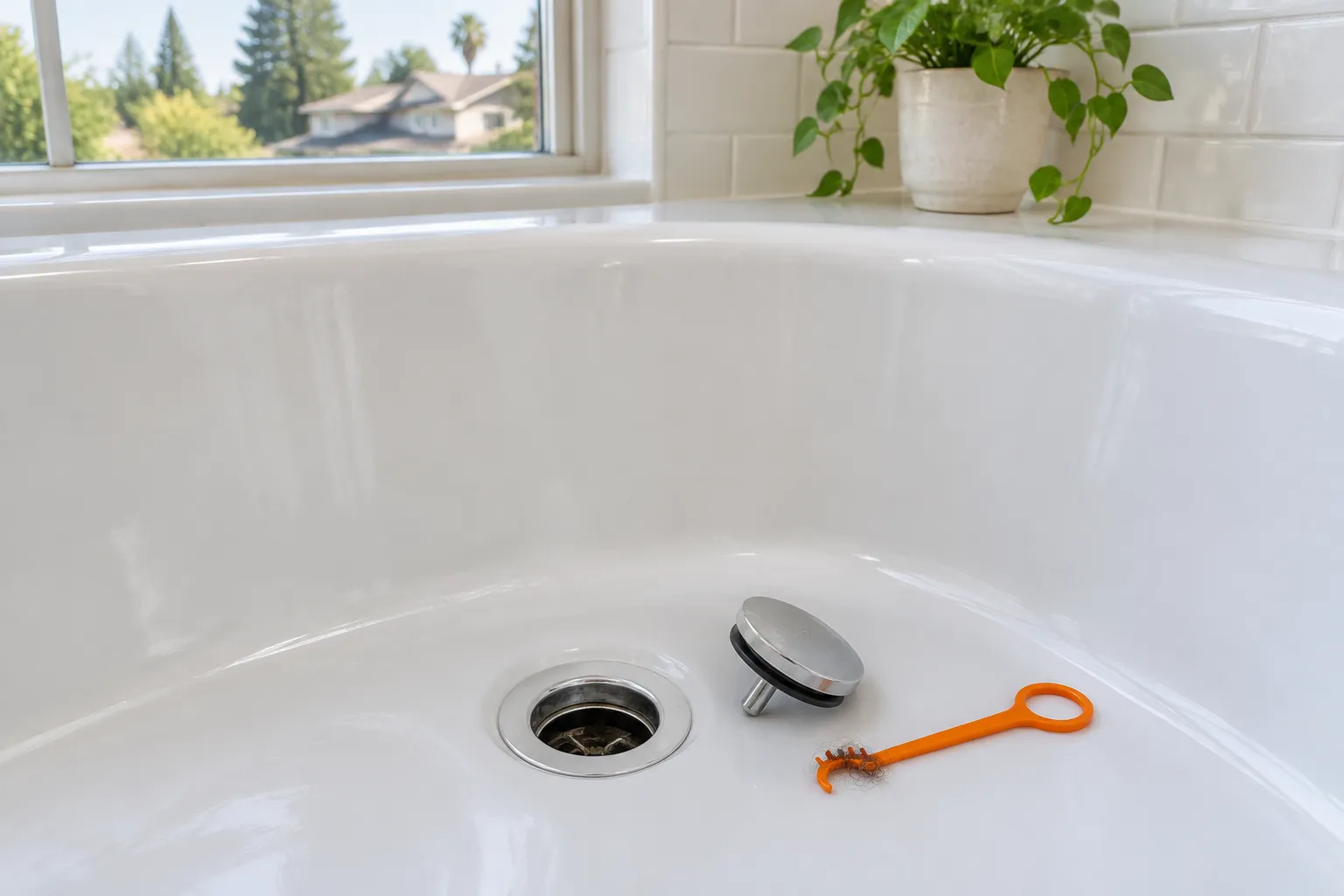
To unclog a bathroom tub drain, find out which stopper you have, take it out, clear the hair wrapped around its stem, then flush the line with hot water. Do that before you reach for any chemical. Most tub drains clear this way, and the work sits at the start of the pipe system covered in our drain cleaning and clogs guide. If the drain stays slow after these steps, the clog is deeper and you need a longer tool or a plumber.
Which kind of tub stopper do you have?
Look at the drain and press it. A lift-and-turn stopper twists and lifts. A push-pull stopper has a button you press. A toe-touch stopper clicks up and down under your foot. A trip-lever stopper has no visible plug: you flip a lever on the overflow plate and a hidden plunger moves inside the pipe.
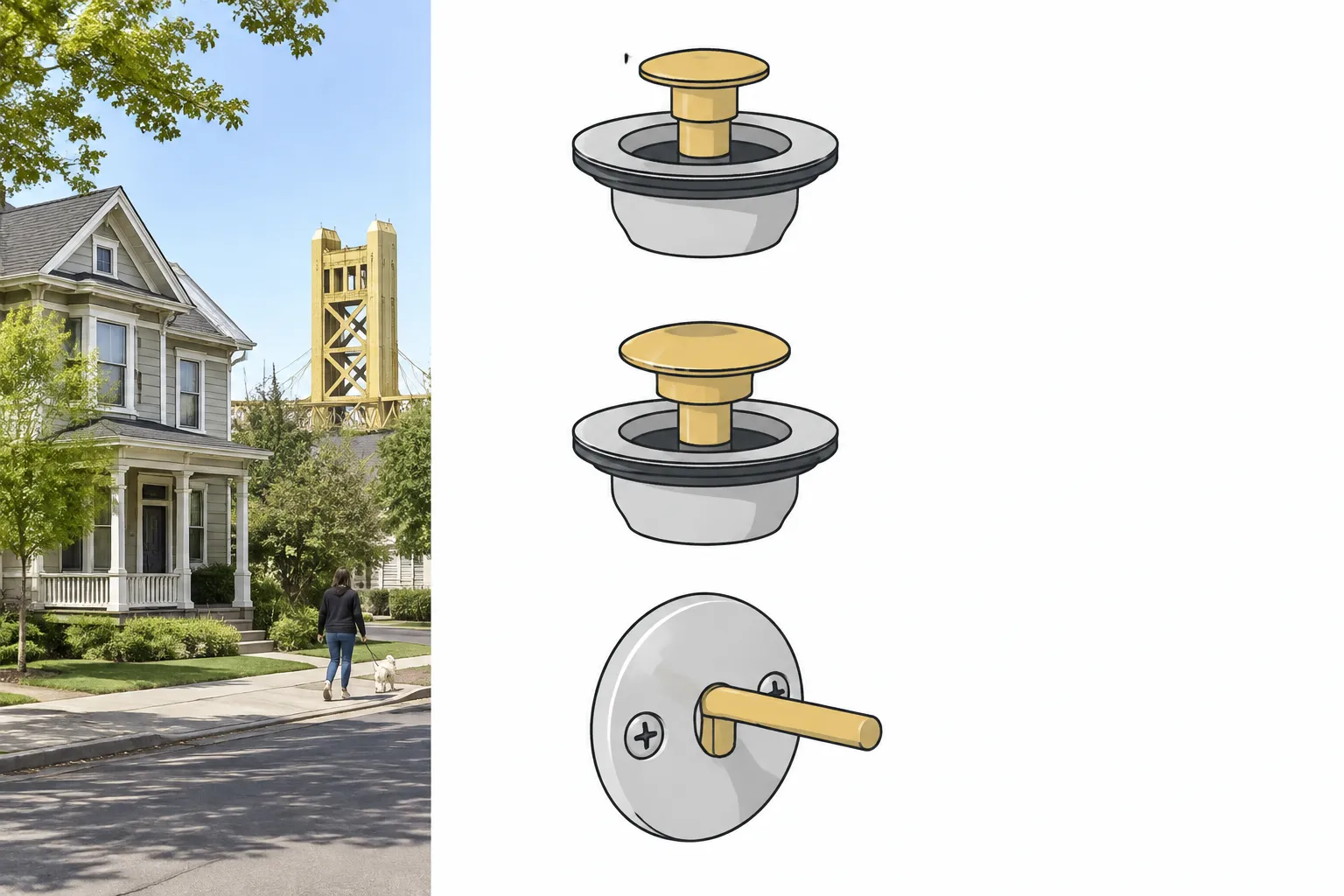
The type matters because each hides the clog in a different place.
| Stopper | How you tell | Where the hair collects |
|---|---|---|
| Lift-and-turn | Knob you rotate to seal | On the post under the cap |
| Push-pull | Cap with a pull knob | Around the threaded stem |
| Toe-touch | Foot-press plug, no knob | Under the cap on the center bolt |
| Trip lever | Lever on the overflow plate, no plug at all | On the plunger or spring inside the overflow tube |
Take a quick photo before you start. It will help you put things back, and a plumber can use it if you end up calling.
How do you remove the stopper and reach the clog?
Unscrew the stopper by hand, turning counterclockwise. Many lift-and-turn and push-pull plugs have a small set screw under the cap, so check with a flashlight and loosen it with a small screwdriver or hex key. A toe-touch plug usually unscrews once you hold the base and twist the cap. A trip-lever needs the overflow plate removed first.
For a trip-lever tub, remove the two screws holding the plate, ease the plate and rod out of the overflow opening in one piece, and lay it on a towel. The hair is usually wrapped around the bottom of the rod. Wipe it clean and look into the opening with a flashlight.
Every tub has a metal or plastic strainer below the plug. If the strainer is screwed in, a pair of pliers handles it. Do not force a stuck piece. Old tubs can have fittings that crack under pressure, and a replacement is more costly than a call to a plumber.
What do you do once the stopper is out?
Pull out the hair first, then pass a barbed plastic strip or a hand auger into the drain opening and withdraw it slowly. Run the hot tap for a full minute to check. If the water now rushes away, the clog sat in the first foot of the pipe and you are done, apart from cleaning the stopper.
Here is the order that works best.
- Put on gloves. The mass you pull out is mostly hair, soap and skin oil.
- Clear the hair from the stopper stem with a wire or tweezers and rinse the parts in the sink.
- Feed the plastic strip down the tub drain opening. Push, twist, withdraw. Wipe the strip each time.
- Pour a kettle of very hot tap water down the opening.
- Fill the tub three inches deep, then pull the stopper to test the flow with weight behind it.
- Put the stopper back, and check that it still seals when closed.
Plungers are useful here with one trick: block the overflow opening with a wet rag so the pressure goes down the drain, not out through the overflow. Add a few inches of water to cover the plunger cup, then push and pull with brief strokes. A flat cup plunger suits a tub better than the flanged one made for toilets.
Why does a tub drain clog in the first place?
A tub drain clogs when hair meets soap. Hair does not dissolve, and soap scum glues it into a mat that narrows the pipe a little more each week. Bath oils, kids' toys, and bits of loofah add to it. The tub drain also has a shallow, narrow trap, which catches debris that a sink trap might pass.
Tubs sit at the lowest bathroom fixtures in many Sacramento houses, so a partial clog shows up quickly as pooling around your feet. Older homes may have galvanized or cast-iron drain lines that have a rough interior, and the rough surface holds hair. Newer plastic lines are smoother, but a loose joint can catch things too.
To slow the buildup, fit a mesh hair catcher over the drain, wipe it after use, and flush the line with hot water once a week. An enzyme cleaner once a month can also help, though it works over days, not minutes.
Should you use a chemical drain opener on a tub?
Avoid it where you can. A chemical opener sits in the tub's shallow trap and may not reach a clog above it, and the liquid can burn skin if it splashes back. Chemical products also complicate a later visit, because a plumber then has to treat the standing water as a hazard.
If you do use one, follow the label, ventilate the room, wear gloves and eye protection, and keep it out of a tub that is already full of water. Do not mix different brands, and never follow it with another product. If the product fails, tell the person who clears the drain.
Some older advice recommends sulfuric-acid cleaners for stubborn clogs. These are strong enough to damage metal and fixtures and are better left to a professional.
When should you call a plumber for a tub drain?
Call a plumber when the steps above fail, when the tub and a nearby sink or shower are slow together, when water backs up in a lower fixture, or when the tub gurgles as a toilet flushes. Those signs point to a shared line, and a household strip or plunger cannot reach it.
A plumber will typically use a cable machine, sometimes with a camera, to find the blockage. Fixr's drain cleaning article (published October 2026) puts snaking at $100 to $300, and more where a camera or after-hours call is involved. These are guide figures only. The plumber you hire sets the price after seeing the line. For a wider view of costs, read how much a plumber costs in Sacramento.
If the tub drain is only one symptom, there may be a larger problem. A recurring blockage in an older home can come from roots in the sewer line, and fixing that is a different job. See sewer line repair plumbers for how that work is scoped.
Before you ask for quotes, have these ready:
- Which stopper type you have.
- What you already tried, including any chemical product.
- Whether other drains are slow.
- Whether you can reach the tub's access panel, if there is one behind the wall.
You can get quotes from local specialists once you have those details. A quote that names the method, whether cable or camera, is easier to compare.
Questions people ask
How long does it take to unclog a tub drain?
A simple hair clog takes ten to twenty minutes by hand, including removing the stopper and cleaning the parts. A plumber with a cable machine usually finishes a tub line in under an hour. A drain that needs a camera, access through a wall, or work on the main sewer line takes longer and is priced differently.
What should I ask before I hire someone to clear a tub drain?
Ask what method they plan to use, whether the quote covers a camera look afterward, what happens if the first cable pass does not clear it, and whether the price changes if they find a second problem. Also ask whether the fee for the visit is credited against the work. Keep answers in writing.
Do I need to be home for the work?
Someone over eighteen should be home to give access to the bathroom and agree to the price. The plumber needs a clear path to the tub, and may need you to unscrew a panel in the next room. You do not have to watch the whole job, but you should be there at the start and when it finishes.
Can I use a plunger on a bathtub drain?
Yes. Block the overflow opening with a wet cloth, cover the plunger cup with a few inches of water, and use quick, firm strokes. A flat-bottomed plunger seals better on a tub than the flanged toilet type. Stop if you see fixtures in other rooms start to gurgle, since that means the blockage is in the shared line.
For the wider picture, start with Sacramento plumber.
Sources used
Last changed