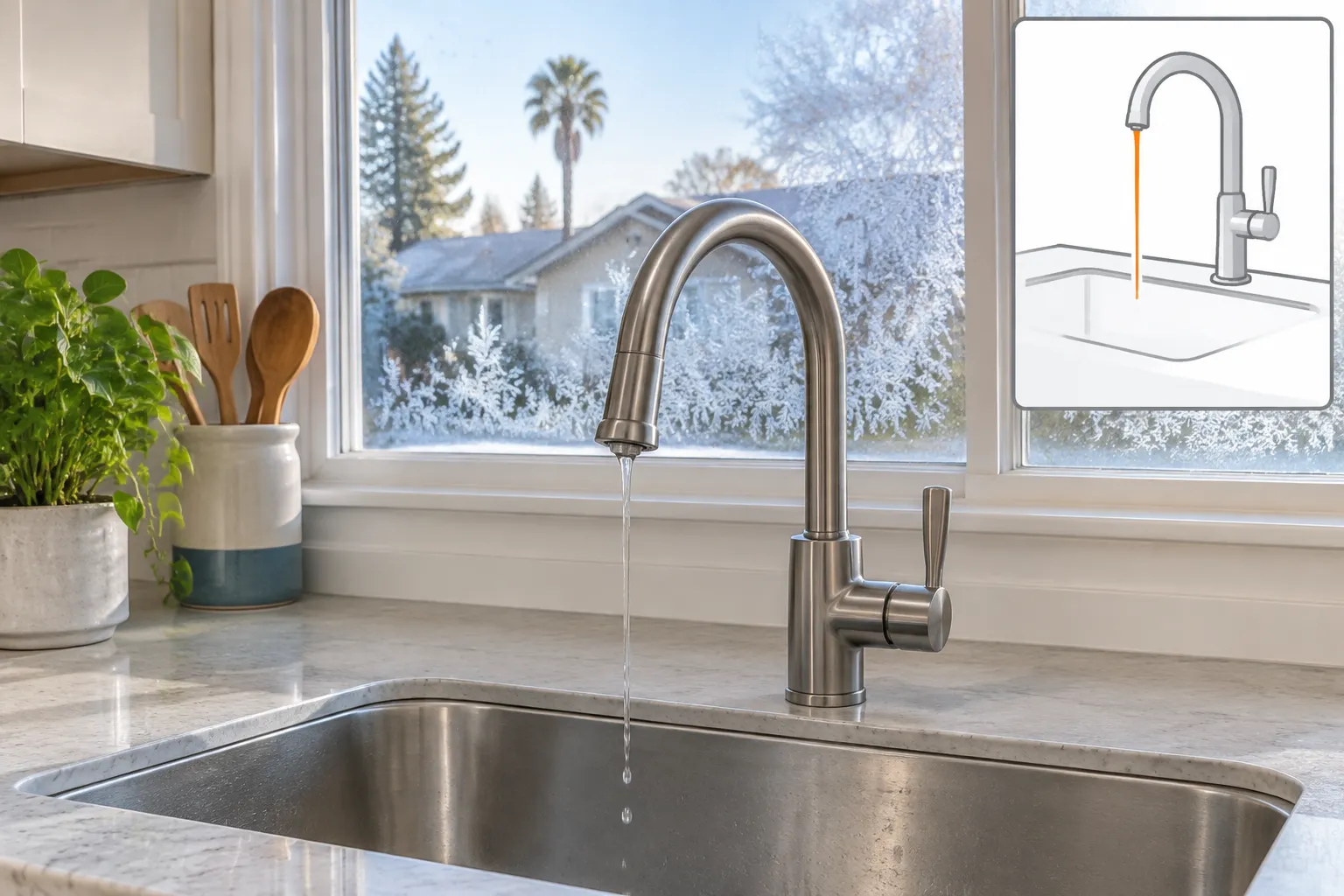
You know a pipe is frozen when a tap gives no water or only a thin trickle on a cold morning, while other taps still work. Frost on a pipe, a bulge, or a pipe that feels icy confirm it. In Sacramento this is unusual, because freezing nights are few. If you are checking, start from the plumbing guide home page for the wider picture, then use the checks below to tell a freeze from a pressure or supply problem.
What are the signs of a frozen pipe?
The clearest sign is no water, or a reduced flow, from a tap on a night that was at or below freezing. Other signs are frost on exposed pipe, a bulge or crack, odd gurgling sounds from a drain, or a toilet that will not refill. A pipe that only one fixture depends on points to a local freeze.
A quick checklist:
- Taps give nothing, or a trickle, and the problem is limited to one area.
- You can see white frost or ice on a pipe in a crawl space, garage or under a sink on an outside wall.
- A pipe feels much colder than its neighbors.
- A pipe looks swollen, or has a hairline split.
- Water stains appear on a ceiling or wall after the temperature rises. That means a split has started to thaw and leak.
- Drains gurgle, or a toilet takes a long time to fill.
Remember the local climate. Sacramento winters are mild and nights at or below 32 degrees Fahrenheit are uncommon, so a dry tap in July is not ice. If the weather has been mild, look at other causes first, which are covered in the next section.
Is it really frozen, or is something else wrong?
Check the weather first, then the rest of the house. If the temperature has not dropped near freezing in the last day, a dry tap is more likely a closed valve, a clogged aerator, a failed cartridge, a water heater problem or a supply outage. Frozen pipes appear after sustained cold, usually overnight, in places exposed to outside air.
To narrow it down:
- Test other taps. If every tap in the house is dry, check the main shutoff, the meter and whether a neighbor has water. That points away from a single frozen line.
- Check hot versus cold. If only the hot side is dry, look at the water heater and its supply line before you assume ice.
- Look at the meter. If the meter dial moves with everything off, you have a leak, not just a freeze.
- Clean the aerator. A faucet that trickles may have a clogged screen.
- Walk the cold spots. Crawl space, garage, attic, exterior walls, hose bibs, irrigation backflow preventers and pool equipment.
Hard water deposits, a partly closed valve and a failing pressure regulator can all mimic a freeze. If the weather was mild and the symptoms continue, treat it as a plumbing fault, not ice, and read the guide on low water pressure.
Where does a plumber work to find a freeze?
A plumber looks wherever a pipe is exposed to cold air: crawl spaces, attics, garage walls, outside walls, utility closets, outdoor taps and irrigation lines. In a house with a slab, the work area may be under cabinets and in the garage. Where a line runs through a wall, they may use a thermal camera or a moisture meter to look for cold spots without opening anything.
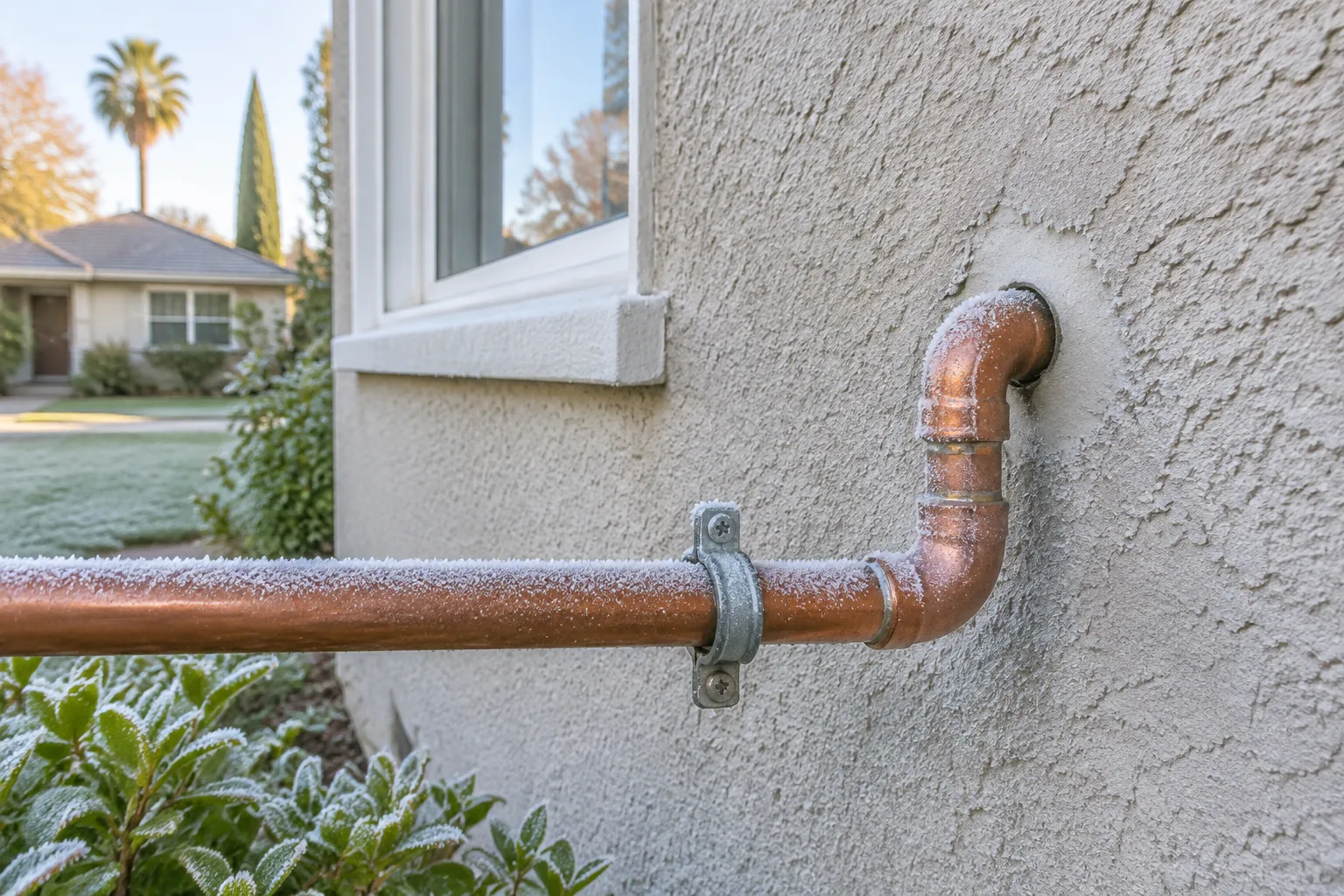
That also answers the question of where the plumber's own work happens in a typical visit: at the fixtures, in the crawl space or in the yard, and at the line from the meter. If the frozen part is behind drywall or under a concrete slab, the plumber will tell you what access is needed first. Your job is to clear the area, show the shutoff and make sure pets are out of the way.
What do you do next if a pipe is frozen?
Open the faucet, find the frozen section and warm it gently from the faucet end. Use a hair dryer on low, a heating pad or warm towels. Never use a flame. If the pipe is cracked or water appears, shut the main valve and call a plumber. The full method is in the guide on how to unfreeze frozen water pipes.
While you wait for the thaw, keep the main shutoff within reach. A frozen pipe can hide a split that only leaks once the ice melts. If you find water, the burst pipe plumber page covers what to do in the first minutes and what the repair usually costs.
How does this apply to a mobile or manufactured home?
Mobile and manufactured homes in the Sacramento area can be more exposed, because supply lines often run below the floor, in the belly, or along the outside of the skirting. A missing skirt panel or failed heat tape can leave a line exposed on a cold night. Check the skirting, the heat tape and any insulation wrap before winter, and look under the home on a cold morning.
A few practical points:
- Skirting and belly insulation. Gaps let wind reach the pipes. Patch gaps before winter.
- Heat tape. Electric heat cable on a line needs its own thermostat and must be rated for the pipe. Replace damaged tape rather than wrap over it.
- Plumbing diagrams. Layouts vary by maker and year. The data plate inside the home, often near the electrical panel, shows the manufacturer and serial number, which the maker or a park manager can use to find the right plan. A plumber on site is the safest guide to where lines run.
- Vents. Mobile home plumbing vents and air admittance valves differ from site-built houses. Do not seal or alter a vent without asking someone who works on manufactured homes.
- Park rules. In a park, the supply line from the park to the home may be the park's responsibility. Ask the park manager who owns the line to the meter.
If you need help, ask any plumber whether they work on manufactured homes before they come. The quote page lets you ask local specialists, and you can mention it there.
When should you call a plumber?
Call a plumber when you cannot reach the frozen section, when the pipe is in a wall or under a slab, when you see a bulge, crack or leak, or when thawing does not restore flow within an hour. Also call if water appears after thawing. California requires a plumbing contractor with a California license for jobs of $1,000 or more and for work that needs a permit, so repairs beyond a simple thaw usually go to a contractor.
Look for expertise in the kind of home you have, such as a crawl space, a slab or a manufactured home. Ask for the contractor license number and verify it with the state board. The City of Sacramento lists plumbing repairs among the work that needs a permit, so ask who pulls it. For how hourly charges work, see plumber rates per hour. For the bigger picture of why it is uncommon here and how to prevent it, read the frozen pipe plumber guide.
Questions people ask
How long does a plumber take to check frozen pipes?
A check of exposed areas often takes an hour or less. Thawing a section and testing for leaks adds time, and a pipe inside a wall adds more. If the plumber needs to open drywall or crawl in tight spaces, ask for a time estimate before work starts.
What should I ask before I hire someone for a frozen pipe?
Ask for their license number and check it with the Contractors State License Board. Ask whether the price is fixed or hourly, how they will thaw without damaging the pipe, what happens if the pipe has split, and whether the repair needs a permit. Ask who patches any wall they open.
Do I need to be home for a frozen pipe visit?
Someone should be there at the start to show the shutoff valve and the cold areas. After that you can often step away, as long as access is clear and you can be reached by phone. In a vacant house or rental, set up access and photo updates first.
Can a pipe be frozen if it is above 32 degrees outside?
Yes, in a few cases. A pipe in a draft or wind can be much colder than the air reading, and a long cold night can follow a day that felt mild. Still, in Sacramento it is rare, so check for other causes if the weather has been above freezing.
Sources used
Last changed