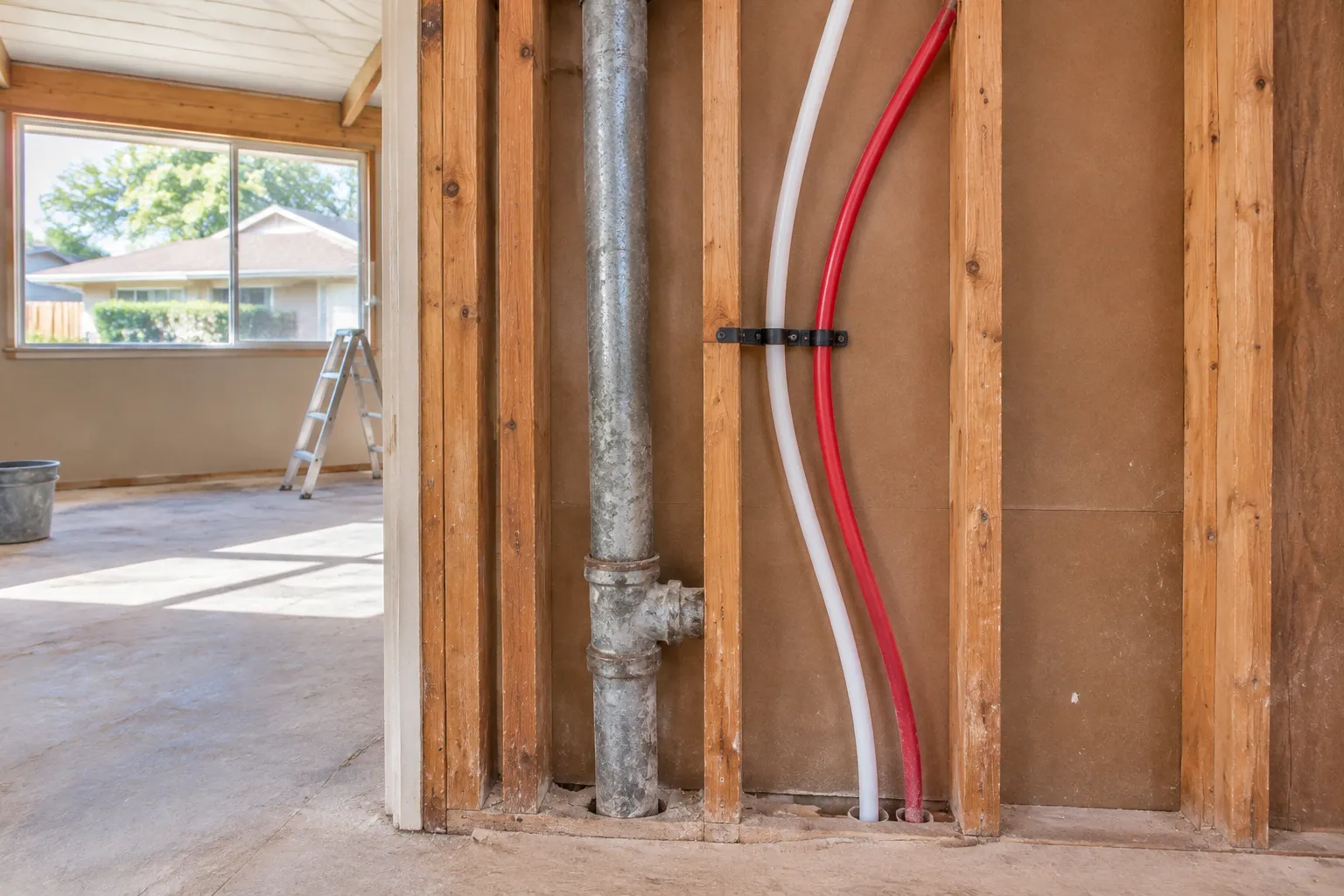
Fixr's plumber cost guide (updated January 2025) says the cost to replace the plumbing in an average size house of 2,000 square feet is $4,000 to $12,000, or $2 to $6 per square foot. A small house with one bathroom is near the low end. A larger home with several bathrooms or hard access is at the high end. The plumber you hire quotes the real price after looking at your house, and Sacramento prices vary.
If you are deciding whether to repipe at all, start with the guide to repiping and pipe materials. This page is about money: ranges by size, by material and by how much wall repair the job involves. You can collect offers on the quote page.
How much does it cost to repipe a house?
A whole-house repipe costs $4,000 to $12,000 for a 2,000 square foot house according to Fixr, and the price rises with the number of fixtures and the size of the house. The plumber replaces the supply lines that bring water to every faucet, toilet, appliance and water heater. The drain pipes are separate work and usually not included.
| House size | Range at $2 to $6 per square foot (Fixr) |
|---|---|
| About 800 square feet | $1,600 to $4,800 |
| About 2,000 square feet | $4,000 to $12,000 |
| About 3,000 square feet | $6,000 to $18,000 |
Ranges come from Fixr's plumber cost guide (updated January 2025) and vary by house. Added work such as drywall, paint and permits is often priced separately.
How much does it cost to repipe a 2,000 sq ft house?
For a 2,000 square foot house, Fixr lists $4,000 to $12,000. The number of bathrooms and fixtures matters more than the square footage, because each fixture needs its own supply run.
Take two 2,000 square foot houses. One has two bathrooms, a single-story layout and an open attic. The other has three bathrooms, two stories and finished walls everywhere. The second may cost double. A per-square-foot figure is a rough guide only, and a good plumber counts fixtures and looks at access before giving a price.
Fixr's $2 to $6 per square foot range reflects this. A house with easy access sits at the bottom. A house with plaster walls, tile or slab-run pipes sits at the top. Online repiping cost calculators are useful for a ballpark, but they cannot see your walls. They also usually leave out patching and permit costs.
What is the cheapest way to repipe a house?
The cheapest way to repipe is PEX pipe in a home with open access, such as an attic or a crawl space, with a plumber who patches minimal wall area. PEX is flexible, goes in fast and uses fewer fittings. It generally costs 25 to 50 percent less than copper. The cheapest option is not always the best, so weigh the tradeoffs.
Three pipe materials are common:
- PEX (cross-linked polyethylene). Flexible plastic, fastest to install and usually the lowest cost. It resists freezing damage better than rigid pipe, though freezing is uncommon in Sacramento. It is not for use in direct sunlight.
- Copper. Durable and long-lived, but material prices are high and installation is slower. It costs the most in most quotes.
- CPVC (chlorinated polyvinyl chloride). A rigid plastic that costs between PEX and copper. Cost to repipe a house with CPVC is often close to PEX. It can become brittle with age, so some plumbers prefer PEX.
For more on the tradeoffs, read the comparison of PEX versus copper. Local building rules decide what is allowed, and the plumber should know which materials the city accepts.
Other ways to save: schedule the work when it is not a rush, choose a plumber who repairs and paints drywall as part of the job or plan to do patching yourself, and combine the repipe with other plumbing projects so you pay for one visit. Do not cut corners on permits or inspections.
When is repiping needed, and what about partial repipes?
Repiping is usually worth considering when pipes leak repeatedly, water looks discolored, pressure is low across the house or the pipes are made of a material known to fail. Damage from repeated pinhole leaks can ruin walls and floors, so the cost of repiping is sometimes less than the cost of repeated repairs. A plumber can inspect and tell you which pipes are failing.
You do not always need a complete repipe. A partial repipe replaces one section, such as the bathroom, the kitchen or a failing run, for a price the plumber quotes. A single leak is a repair, not a repipe. Ask the plumber what a full repipe would add beyond the partial option, and whether the remaining pipes have a similar age and condition.
Signs that point to a larger problem:
- Several leaks in a short period.
- Brown, yellow or metallic-tasting water when you run a tap after the house has been empty.
- Pressure that is low at every fixture and not just one.
- Pipes of a material the plumber flags as failing, such as old galvanized steel.
Low pressure alone can have other causes. See the page on a plumber for low water pressure before deciding.
What extra costs come with a repipe?
Beyond the pipe itself, plan for drywall repair, paint, a permit, a new water heater connection and possibly a pressure regulator. Wall and ceiling repair is the biggest extra, depending on how many holes are cut. Some plumbers include patching and some do not, so ask.
- Drywall and paint. Plumbers cut access holes to run new pipe. Patching is a separate line item or a separate trade.
- Permit and inspection. Whole-house repiping typically needs a permit, and the plumber normally pulls it. Fees vary, so ask what is included.
- Water heater and fixture connections. New shutoffs and supply lines at each fixture add cost.
- Pressure regulator or expansion tank. Often replaced during the job if worn.
- Asbestos or lead concerns in older homes. Rare, but a plumber who finds suspect material may have to stop. This is more of a concern in very old buildings than in most Sacramento housing.
- Multifamily buildings. In a multifamily building, repiping shared risers and each unit's lines needs coordination between owners, and costs per unit can be lower or higher depending on access.
Typical timelines are one to five days for a house, depending on size. Water is off for part of each day.
How do you compare repipe quotes?
Compare repipe quotes on a line-by-line basis: number of fixtures, pipe material, fittings, patching, permit, cleanup and timeline. A quote that lists only a total is hard to compare. Ask each plumber to list the scope and what is not included. A low bid that leaves out drywall repair is not a low bid.
California requires a plumbing contractor with a California license (C-36) for jobs of $1,000 or more in labor and materials, and for any work that needs a permit, according to the Contractors State License Board. A repipe is far above that, so check the license on the state board's website before signing, and get at least two or three written quotes. If you want to see how a typical job unfolds, read about how plumber jobs run. For hourly rates, see what a plumber costs per hour. The Sactown Plumbing Guide home page lists more topics.
Questions people ask
How long does repiping a house take?
Most house repipes take one to five days depending on the size of the house, the number of bathrooms and how easy the walls are to open. Water is typically off for part of each day. Patching and painting can add days afterward. Ask the plumber for a schedule, and for a plan for where you will wash and cook during the work.
What should I ask before I hire someone to repipe my house?
Ask for a written scope with the pipe material, the fixture count, who pulls the permit, whether wall patching and paint are included and how long the work takes. Ask about warranty on labor and how water is handled each day. Confirm the contractor's license number on the state board's website.
Do I need to be home during a repipe?
You do not have to be home every minute, but someone should be there at the start to walk through the house and at the end to review the work. Plumbers need access to every room with a fixture. Plan for the water to be off for hours at a time and for noise, dust and movement through the house.
How long does new plumbing last?
PEX is typically expected to last decades, and copper is known for lasting longer, though actual life depends on water quality and installation. A repipe is a long-term fix, and the pipe material and the installer matter. Ask the plumber for the manufacturer's rating and any warranty on the material and the labor.
Sources used
Last changed