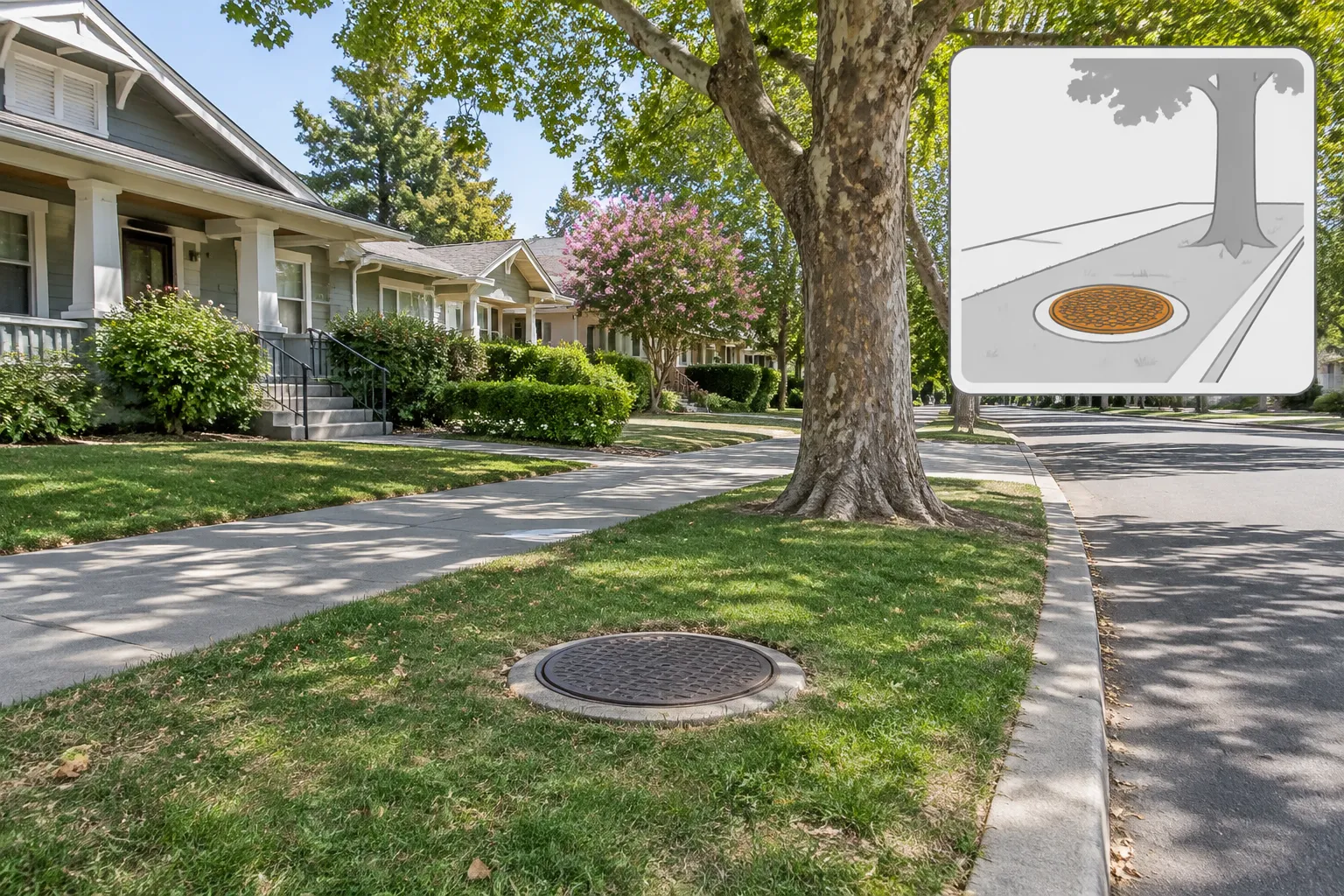
This Old House's sewer line cost guide (updated March 2026) says a sewer line replacement costs an average of $3,320, with a range of $1,390 to $5,320. Where you land in that range depends on how long the pipe is, how deep it runs and whether the plumber digs a trench or uses a trenchless method. Cleaning a clogged sewer line is much cheaper: Fixr's guide lists $350 to $650 to unclog a main sewer line. Sacramento prices vary, and the specialist you hire quotes your actual number after looking at the pipe.
The page on sewer line repair and replacement explains how the work happens and the warning signs. This page sticks to cost: what each type of job runs, what pushes it up and how to compare quotes. If you want numbers for your own house, you can get quotes from local specialists on the quote page.
What is the average cost to fix a sewer line?
This Old House's sewer line cost guide (updated March 2026) gives the average cost of a sewer line replacement as $3,320, with a range of $1,390 to $5,320. A single cracked section or a belly (a low spot that holds water) is usually fixed at the low end. A collapsed pipe that runs the full length to the street is at the high end. The guide does not list a separate price for a repair that does not replace the whole pipe, so ask the plumber for a written estimate.
| Job | Typical range |
|---|---|
| Camera inspection of the sewer lateral | $100 to $500 (This Old House) |
| Cable (snake) the sewer line | $100 to $500 (Fixr) |
| Hydro jetting the sewer line | $500 to $1,800 for a main line (Fixr) |
| Trenchless relining, cured-in-place pipe (CIPP) | $60 to $250 per linear foot (This Old House) |
| Trenchless pipe bursting | $60 to $250 per linear foot (This Old House) |
| Open-trench full replacement | $1,390 to $5,320, average $3,320 (This Old House); $50 to $250 per linear foot (Fixr) |
These numbers come from This Old House's sewer line cost guide (updated March 2026), Fixr's main sewer line guide (updated January 2025) and Fixr's drain cleaning article (published October 2026). Ranges overlap because pipe length, depth and access vary so much from one lot to the next.
How much does it cost for a plumber to snake your sewer line?
Fixr's main sewer line guide says the cost to snake a main sewer line is $100 to $500, and Fixr's drain cleaning article lists $500 to $1,800 to hydro jet one. Cabling pushes through the blockage. Jetting uses high-pressure water to scour the walls of the pipe, which clears grease, scale and some roots more completely. Neither one repairs a broken pipe.
Snaking is the first step when the main line backs up. If the plumber then runs a camera and sees a crack, a belly, a root mass or an offset joint, the repair estimate comes next. Cleaning without inspecting can leave you in the same spot a month later. A camera inspection at $100 to $500 shows what the pipe looks like inside, and many plumbers will give you a recording.
If you want more about the jetting method, read the guide on hydro jetting drain cleaning.
How much does trenchless or no-dig sewer line replacement cost?
Trenchless sewer line replacement is priced by the foot: This Old House's sewer line cost guide (updated March 2026) lists $60 to $250 per linear foot. You pay for the equipment and the lack of digging. The method avoids tearing up the yard, driveway or landscaping, which can offset the higher price when restoration would be expensive.
There are two main trenchless methods. In relining, a resin-soaked liner is pulled into the old pipe and cured, creating a new pipe inside the old one. In pipe bursting, a tool pulls a new pipe through the old path while breaking the old one apart. Relining works on pipes that are mostly intact. Pipe bursting works when the old pipe has collapsed or is badly offset, though it still needs a small access pit at each end.
Trenchless work is $60 to $250 per linear foot per This Old House, and Fixr lists main sewer line replacement at $50 to $250 per linear foot. The two overlap, so the better comparison is the total, including restoration. A longer discussion of the process is in the guide to no-dig sewer line repair.
What is the cost of main sewer line replacement in Sacramento?
For a main sewer line, This Old House's average is $3,320, with most homeowners paying $1,390 to $5,320, depending on length and depth. A short lateral at a corner lot with the cleanout near the front is at the low end. A long run under a driveway, a mature tree or a patio is at the high end. Older homes with clay or cast iron pipe often need full replacement rather than a patch. Permit fees typically run $100 to $1,000 according to This Old House.
In Sacramento, the pipe that connects your house to the public sewer is called the sewer lateral. Where the Sacramento Area Sewer District (SacSewer) serves your address, Sacramento County's 311 service says the property owner is responsible for the upper lateral and SacSewer for the lower lateral and main line. SacSewer serves unincorporated Sacramento County and parts of the City of Sacramento, not all of it, so confirm which agency serves your address before you hire anyone. If the problem is in the lower lateral, the utility may handle it, and that changes your cost. Call the utility's customer service before you spend money on a repair you may not have to pay for.
Repair or replacement of a sewer lateral typically needs a permit, and the City of Sacramento has a permit page for residential sewer service replacement or repair. The plumber you hire should know the process, and the permit and inspection fees are usually added to the quote. Ask whether they are included.
What raises or lowers the cost of a sewer line job?
Six things move the price most: the length of pipe, its depth, the method, what is above it, the pipe material and what the repair needs to connect to. A lateral under open lawn costs far less to reach than one under a concrete driveway or a 40-year-old oak.
- Length. Every extra foot adds material and labor. A 30 foot run is cheaper than a 100 foot run.
- Depth. Deeper pipes need more excavation and shoring, and more careful safety work in the trench.
- Method. Trenchless adds equipment cost but saves restoration. Open trench is the reverse.
- What is above the pipe. Concrete, pavers, trees, fences and utility lines raise the cost of digging.
- Pipe material. New pipe in PVC or ABS is not the expensive part. The labor and access are.
- Permits and inspection. City permit fees and inspection visits add to the quote. They are not a place to skip steps.
Yard repair after sewer line replacement is a cost many homeowners forget. Replacing sod and sprinkler heads is cheap. Replacing a concrete walkway or driveway is not. Ask the plumber whether restoration is in the quote, and who does it.
A collapsed sewer line, where the pipe has caved in, cannot be cleared by snaking. It needs digging or bursting. A sagging line (belly) holds water and waste and causes repeat clogs. Fixing it means replacing that section, not just cleaning it. Both are in the ranges above.
How do you compare sewer line quotes?
Compare the same scope on each quote: pipe length, method, permit, restoration and what happens if the crew finds something unexpected. A low price that leaves out the permit, the cleanout and the yard repair is not low. Ask each plumber to put the full scope in writing, then compare totals, not per-foot figures alone.
California requires a plumbing contractor with a California license (C-36) for jobs of $1,000 or more in labor and materials, and for any work that needs a permit, according to the Contractors State License Board. A sewer replacement is well over that threshold, so check the license number on the state board's website before you sign. You can start by collecting offers on the quote page. For comparison against general rates, see the plumber cost guide. You can also return to the Sactown Plumbing Guide home page for other topics.
Questions people ask
How long does sewer line replacement take?
Most sewer line replacements take one to three days. A short trenchless job can finish in a day. An open-trench job takes longer when the run is long, deep or crosses a driveway, and landscaping or concrete repair can add days afterward. Permit approval and inspection happen on the city's schedule, so ask for a realistic timeline in the quote.
What should I ask before I hire someone for sewer line replacement?
Ask for the total price in writing, the method and why, who pulls the permit, whether restoration is included, and how long the work takes. Also ask for a camera recording of the problem and for the contractor's license number to check on the state board's website. Ask what happens if they find more damage than expected.
Do I need to be home for sewer line replacement?
Usually someone needs to be there at the start to show where the cleanout is and approve the plan, and again for the final walkthrough. The work itself does not need you present, but water use is restricted while the line is open. Plan to avoid showers, laundry and dishwashing during the work, and ask the plumber when you can use water again.
Is a sewer line repair covered by homeowners insurance?
Standard homeowners policies often exclude wear, tree root damage and gradual deterioration, though some cover sudden damage. A separate service line endorsement may exist. This is a question for your insurer, because policies differ. Ask before you start work, and keep the camera recording and invoice in case you file a claim.
Sources used
- How Much Does a Sewer Line Replacement Cost, This Old House (updated March 2026)
- Cost to Unclog Main Sewer Line, Fixr (updated January 2025)
- Drain Cleaning Near Me: Costs and Emergency Services, Fixr (published October 2026)
- City of Sacramento, residential sewer service replacement or repair permit page
- California Contractors State License Board, licensing rules for work of $1,000 or more
Last changed