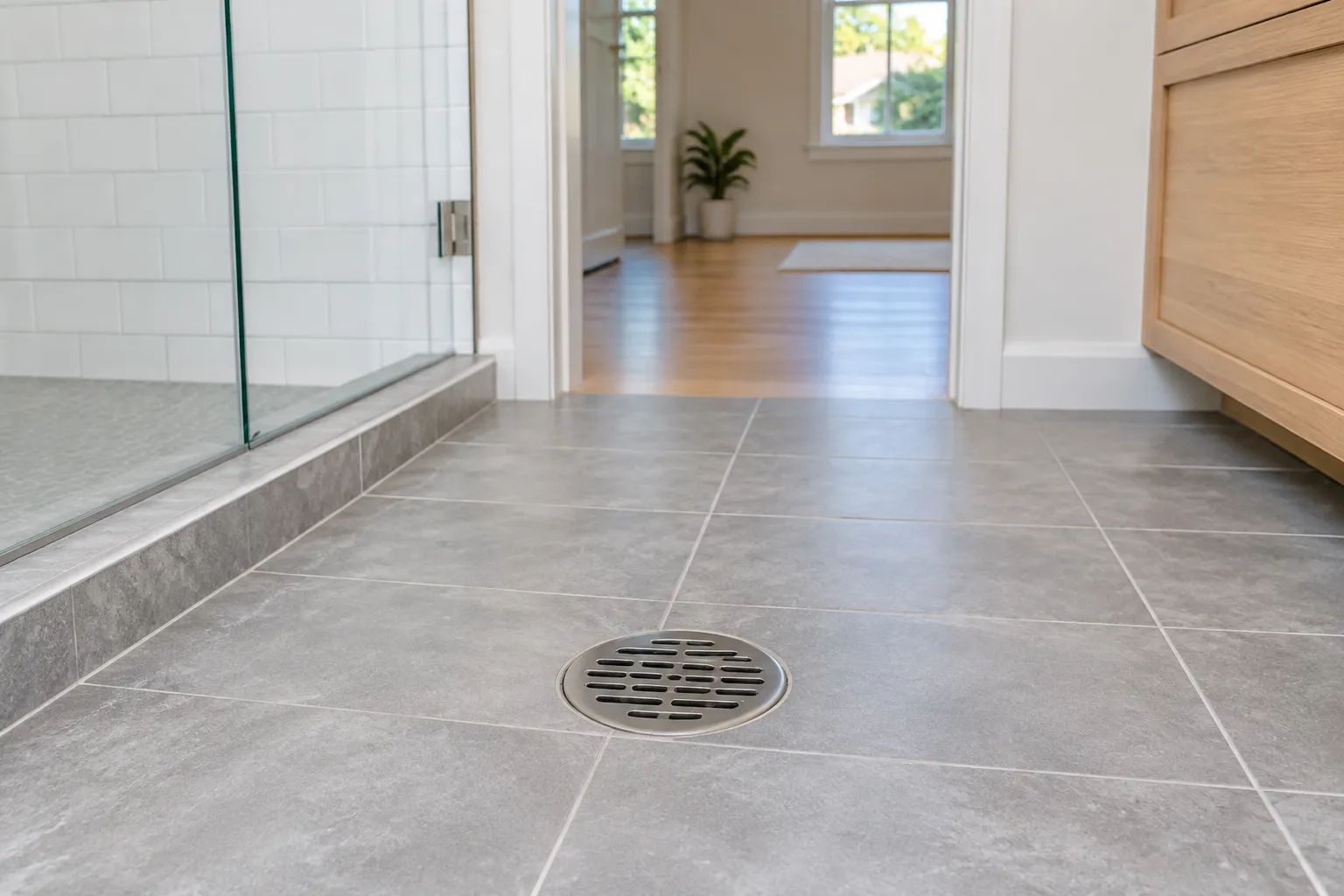
A sewage smell in your house almost always means sewer gas is getting past a drain trap, a toilet seal or a vent. The cause is often simple, such as a floor drain that dried out. If the smell is strong, constant or comes with backups, the sewer lateral outside may be cracked or blocked, and a plumber needs to look. Rotten-egg smells deserve a quick safety check first.
This page helps you work out which case you are in. It is one part of the wider sewer line repair and replacement guide, which covers what to do when the problem turns out to be underground. For the rest of the site, start at the Sactown Plumbing Guide home page.
What does a sewer smell in your house mean?
A sewer smell means gas from the sewer or from waste pipes is entering the living space instead of venting outside. Sewer gas is a mix of gases from decaying waste, including hydrogen sulfide, which smells like rotten eggs. The most common causes are dry traps, bad toilet seals, blocked vents and cracked sewer lines.
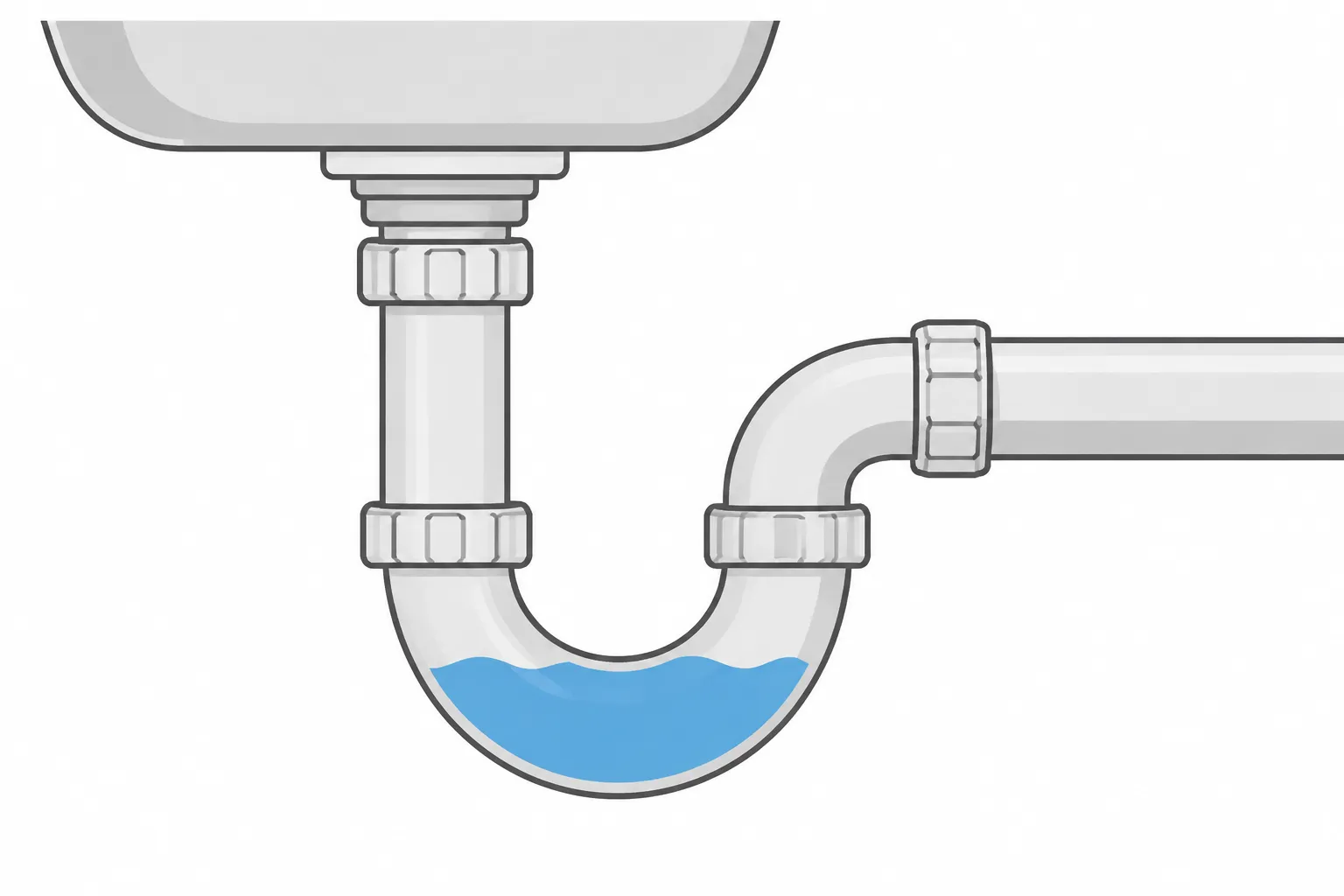
Every drain has a trap), a U-shaped bend that holds water to block gas. If the water evaporates or is siphoned out, the gas comes up. The usual suspects, in order of how often they turn up:
| Cause | Typical sign | Who fixes it |
|---|---|---|
| Dry trap (floor drain, guest bath, laundry sink) | Smell near one drain, worse in unused rooms | You, with water |
| Failed toilet wax ring or loose toilet | Smell around one toilet, sometimes a rocking bowl or a wet floor | Plumber, or experienced DIY |
| Blocked or broken vent pipe | Gurgling, slow drains, smell near several fixtures | Plumber |
| Dirty drain or garbage disposal | Smell from one sink that fades after cleaning | You |
| Cracked or clogged sewer lateral | Smell in several places or outdoors, backups, wet ground | Plumber |
| Missing or loose cleanout cap | Smell outdoors near the house wall | You or plumber |
Sacramento has a local twist: dry summers evaporate trap water faster than in damp climates, so a floor drain in a garage or a bathroom nobody uses can dry out in a few weeks. That is the single most common reason for a smell that "comes and goes."
What to do next
Work from the cheap and safe checks to the ones that need a plumber. Pour water into every drain, check toilets and cleanout caps, then see whether the smell changes with the weather, with laundry or with use of one fixture. If it persists after these checks, or any backup appears, book a plumber and a camera inspection.
Steps you can safely do in an afternoon:
- Run water in unused drains. Pour a quart of water down each floor drain, guest bathroom sink, tub and laundry drain. In a floor drain you rarely use, add a tablespoon of cooking oil to slow evaporation. Re-check after a day.
- Smell around each toilet. If the odor is strongest at the base, the seal may have failed. The toilet repair ring flange guide explains what that repair involves, and the plumber toilet repair page covers when to hire out.
- Clean the usual sources. Kitchen disposals, shower drains and overflow holes hold hair, soap and food. Cleaning a drain with a brush or snake removes the smell source. The bathroom sink clog guide shows a safe method.
- Check outside. Walk the house exterior. A cleanout cap that is missing or cracked lets gas out. A roof vent blocked by a nest or debris can cause gurgling and smell, but do not climb onto the roof unless you are comfortable and safe.
- Track the pattern. Does it come and go with weather, with the washing machine, with the dishwasher, or after heavy water use? A smell that changes with one fixture points to that fixture's trap or drain. A smell that tracks with several fixtures points to the vent or the main line.
Do not use chemical drain cleaners to chase a smell. They do not fix a dry trap, and they make a later plumber visit riskier. For stubborn buildup, see drain cleaning.
A note on odors that are not sewage. A rotten-egg smell from the hot water tap only often comes from the water heater, not the sewer. A smell like rotten eggs near a gas appliance is different again: natural gas has a sulfur odor added so you can detect leaks. If you smell gas, leave the house, do not use switches or phones inside, and call 911 and your gas utility's emergency line (listed on your PG&E bill) from outside.
Is a sewer smell in the house dangerous?
Low-level sewer odor is usually a nuisance and a sign to find the source, but it should not be ignored. Sewer gas contains hydrogen sulfide, which irritates eyes and the nose and throat at low levels and is dangerous at high levels. Strong or persistent smells, headaches, dizziness or nausea are reasons to ventilate and get help.
The federal Agency for Toxic Substances and Disease Registry notes that hydrogen sulfide can be smelled at very low concentrations, but that smell is not a reliable warning at higher ones, because the sense of smell can fade after exposure. So do not judge safety by how strong the odor seems. A faint smell near a dry drain is almost always a trap problem. A heavy smell, a sewage backup, or a smell in a basement or crawl space with symptoms is a different story.
What to do:
- Open windows and run exhaust fans.
- Leave the area if anyone feels dizzy, has a headache or nausea, or if the smell is strong. Call 911 if someone feels faint or unwell.
- Keep children, pets and anyone with breathing problems out of the affected room until the cause is found.
- Do not enter crawl spaces or pits where sewage has collected.
When to call a plumber business
Call a plumber if the smell does not go away after you refill traps and check the toilets, if drains gurgle or back up, if you see wet ground or damp spots over the sewer line, or if the smell is strong. These signs suggest a blocked vent or a damaged sewer lateral, and diagnosis needs a camera.
A plumber will typically:
- Smoke-test or camera-inspect the drain and vent lines, and run a camera down the sewer lateral from the cleanout.
- Check the toilet seals and the trap arms.
- Look for roots, sags, cracks and offset joints in the line.
If the lateral is the problem, the next step is a repair plan: clearing with a cable or hydro jetting, then a no dig sewer line repair such as lining, or a trench replacement. Those options vary in cost, and the sewer line replacement cost guide shows what drives the price.
In the City of Sacramento, sewer lateral work needs a permit, and where SacSewer is the sewer provider the lateral is split: the owner has the upper lateral, and SacSewer has the lower lateral and main line. SacSewer serves only parts of the city, so confirm which agency serves your address and which part is yours before you pay for work. California requires a plumbing contractor with a California license (C-36) for jobs of $1,000 or more in labor and materials, so check the license number with the state before you agree to a lateral repair.
To compare prices, get quotes from local specialists.
Questions people ask
How long does a plumber take to find a sewer smell?
A basic check of traps, toilets and vents often takes an hour or two. A camera inspection of the lateral adds another hour. If the cause turns out to be a dry trap, the visit can be short. Finding a blocked vent or a damaged sewer line takes longer and may need a second visit.
What should I ask before I hire a plumber for a sewer smell?
Ask how they will find the source (camera, smoke test or both), whether the diagnosis is a flat fee or hourly, and what happens if the cause is the sewer lateral. Ask for the footage. Check the contractor's license number with the state before work above $1,000.
Do I need to be home for a sewer smell inspection?
Yes, at least at the start. The plumber needs to be shown where the smell is strongest, and wants access to the cleanout, the bathrooms and the roof vents. Being home at the end lets you see any camera footage and agree the next step.
Why does the sewage smell come and go?
Intermittent smells usually come from traps that dry out between uses, from wind or temperature changes affecting a vent, or from a partial clog that shifts after heavy water use. Note when it happens, and tell the plumber, because the pattern points toward the cause.
Can a sewer smell mean a broken sewer line?
Yes, though it is less common than a dry trap. A cracked lateral leaks gas and wastewater into the soil, and the smell may be stronger outdoors or in a crawl space, with slow drains or wet ground. Only a camera inspection confirms it.
Sources used
Last changed