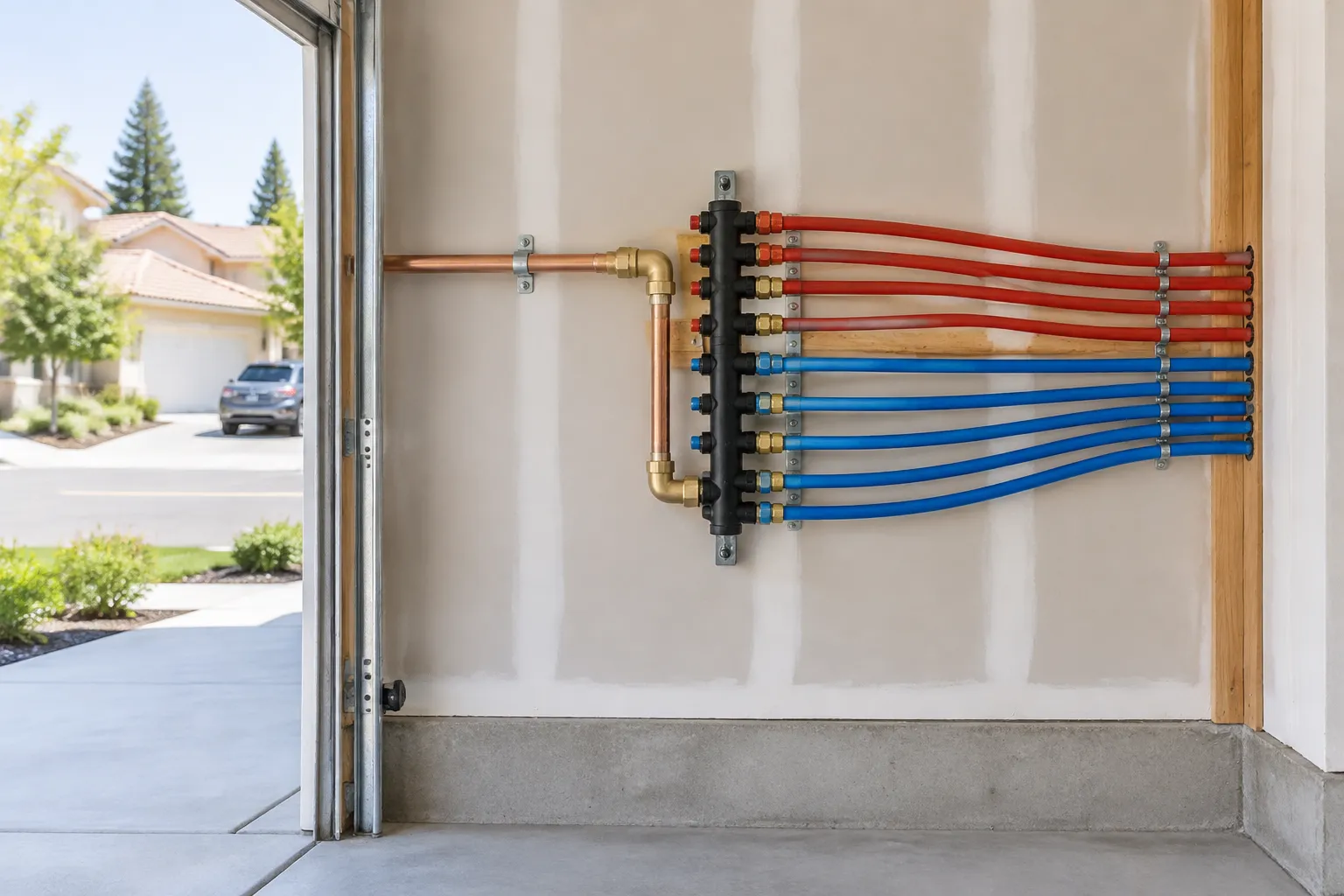
Repiping means replacing the water supply lines in your house, usually all of them, with new pipe. It is a big project, so it makes sense only when old piping is failing, such as repeated leaks, discolored water, weak flow or a material with a poor record like polybutylene. Many Sacramento owners choose PEX, with copper as the pricier alternative. Fixr's plumber cost guide puts the cost at $4,000 to $12,000 for an average 2,000 square foot house.
How do they repipe your house?
A plumber shuts off the water, installs new supply lines to every fixture, connects them to the main and water heater, and removes or abandons the old pipe. For most homes the work is done in sequence: plan the routes, open small access holes, run the new lines, test under pressure, then patch the walls. The job usually takes a few days, and you have no running water during the working hours.
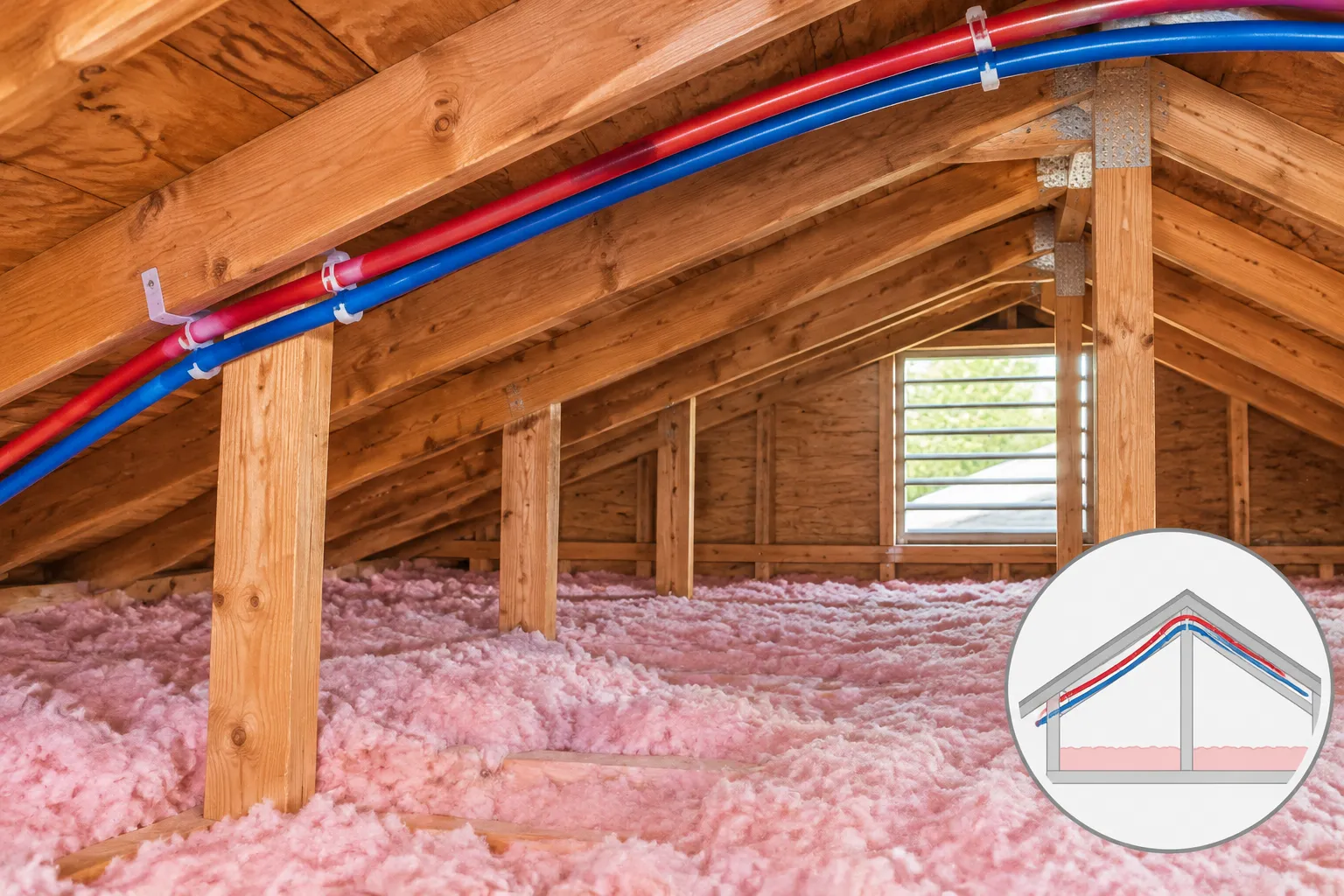
In more detail:
- Walkthrough and plan. The plumber counts fixtures, checks the crawl space or attic, looks at the main line and agrees a route. Ask for a written scope.
- Permit. The City of Sacramento lists plumbing repairs among the work that needs a permit, and a repipe will normally be inspected. Ask who pulls it.
- New piping. With PEX, lines are often pulled through walls from a manifold, which can mean fewer cuts than older methods. With copper, each joint is soldered or pressed.
- Pressure test and inspection. The system is tested before walls are closed.
- Patching. Drywall repair and paint are often separate from the plumbing quote. Confirm who does them.
You can often avoid tearing out whole walls. Small access holes, closets, attics and crawl spaces carry most of the routes. A complete repipe on a slab-on-grade house is harder, because lines may run through the attic or be rerouted rather than replaced in the slab.
When do you need to repipe a house?
You usually need it when the pipes are failing repeatedly, when the material is known to fail, or when the water quality or flow has fallen. Signs include repeated pinhole leaks, green or brown stains, rusty or metallic water, low pressure at several fixtures, and visible corrosion at joints. One leak does not mean a complete repipe, but a pattern does.
Materials to watch:
- Polybutylene. A plastic once used for home water supply lines, known for failing at fittings. Many owners replace it before it leaks.
- Galvanized steel. Rusts from the inside, narrows and loses flow. Often found in houses built before the mid 20th century.
- Older copper with pinholes. Copper can develop pinhole leaks, and once a few appear, more often follow.
- Lead solder. Federal law banned lead solder in drinking water systems in 1986, so older homes may have it. Ask a plumber about testing.
Condos, duplexes and other multifamily buildings add a wrinkle: shared risers and stacks may belong to the association, so a unit repipe may need board approval and coordination with neighbors. Ask your association before you book anything.
Good alternatives to a complete repipe exist. If only one run is failing, a plumber may replace that section, or you may repipe a bathroom or kitchen. Ask for both prices.
If you are seeing a sudden leak now, read about what to do when a pipe bursts, then decide the bigger question.
What do plumbers use now instead of copper pipe?
Most use PEX, which is cross-linked polyethylene, flexible plastic tubing in red, blue and white. It is quicker to install, can be pulled through walls with fewer joints and costs less than copper. Copper remains in use, and CPVC appears in some jobs. Which one fits depends on your budget, water chemistry and what the plumber recommends.
For a side-by-side comparison on cost, lifespan, flow and freezing, see PEX versus copper. The short version: PEX is usually cheaper and faster, copper has a long track record and is rigid and fire resistant.
What is the downside to PEX plumbing?
PEX can be damaged by sunlight, so it must not sit in the sun before or after installation. Some chemicals and solvents can attack it, and rodents or pests can chew it. Fittings can be a weak point if installed wrong, and some people dislike plastic for health or environmental reasons. PEX also can still freeze, though it tolerates it better than copper.
Other points to weigh:
- Not for outdoors in sunlight. Keep it covered.
- Fitting types matter. Crimp, clamp and expansion systems are not interchangeable. The installer should use matched parts.
- Hot water. PEX has temperature and pressure ratings, which the plumber should follow near the water heater.
- Resale perception. Some buyers prefer copper. Others do not care.
PEX is widely used across the country and is allowed by plumbing codes. Ask the plumber to confirm the product they plan to use is approved for use where you live.
How much does it cost to repipe a house?
Fixr's plumber cost guide (updated January 2025) puts the cost to replace the plumbing in an average 2,000 square foot house at $4,000 to $12,000, or $2 to $6 per square foot. Price rises with the number of bathrooms, two stories, tight access and drywall repair. Sacramento prices vary. Get two or three written local quotes, and compare what each one includes.
| Item | Typical range | What moves it |
|---|---|---|
| PEX repipe, about 2,000 sq ft | $4,000 to $12,000 for any pipe material (Fixr) | Bathrooms, access, permit, patching |
| Small home or condo | Often lower end | Fewer fixtures |
| Drywall and paint | Sometimes extra | Number of holes |
Labor is often a large part of the bill. For hourly rates see plumber charges per hour, and for a detailed price breakdown see repipe house cost. The general plumber cost guide puts it in context.
What are three types of plumbing?
Residential plumbing is usually described as three systems: water supply, drain-waste-vent, and gas piping. Supply brings clean water in under pressure. Drain-waste-vent carries wastewater out by gravity and vents sewer gas. Gas piping feeds appliances. A repipe normally covers only the supply system. Drain and gas work are separate jobs with their own rules.
If you are weighing a repipe against another project, note that a project that touches gas, such as moving a range, needs its own approach. See plumber gas line installation for that.
Can you legally do your own plumbing in California?
Homeowners can do some work on their own home, but California requires a contractor with the right California license for plumbing jobs of $1,000 or more, and for any job that needs a permit, according to the Contractors State License Board. The City of Sacramento lists plumbing repairs as permit work, and a repipe will normally need one. Gas piping and water heater work carry extra safety rules. For a whole house repipe, most owners hire a C-36 plumbing contractor.
Check the license number on the state board lookup before you sign. Ask for proof of insurance and a written scope.
Questions people ask
How often do house water pipes need to be replaced?
It depends on the material and your water, so there is no single number. Ask a plumber what yours looks like. Replace them when leaks recur, flow drops or the material is known to fail, not by the calendar alone.
How much does it cost to repipe a 2,000 square foot house?
Fixr's plumber cost guide suggests $4,000 to $12,000 for a 2,000 square foot house, with extra for two stories, hard access and patching. Treat this as a guide. A plumber who has seen the house quotes the real number, so compare at least two.
What type of plumbing do old houses have that is bad?
The usual problems are galvanized steel, which rusts and restricts flow, and polybutylene, which can fail at fittings. Older copper can pinhole, and lead solder may be in homes built before 1986. A plumber can identify what you have in a walkthrough.
What is the cheapest way to repipe a house?
PEX is usually the cheapest full repipe material. Another way to save is to replace only the failing section, or repipe in stages. Getting several written quotes and agreeing on who patches walls also cuts surprise costs. Avoid choosing the lowest price if the scope is not clear.
How long does it take to repipe a house?
A typical single-family house takes about two to five days, depending on size, access and the number of fixtures. Water is off for much of each working day. Drywall repair and inspections can extend the time before the project is finished.
Can you repipe a house without removing drywall?
Often you can reduce it a lot. Plumbers use attics, crawl spaces and small access holes, and PEX can be pulled through framing. Some drywall repair is usual. Ask the plumber how many openings to expect and who patches them.
If your house has a failing line, the home page lists related guides, and the frozen pipe guide explains how rarely freezing is the reason here.
Read on
- PEX vs copper pipe
PEX vs copper for a Sacramento home: cost, lifespan, flow, freeze resistance and which suits a repipe.
- Repipe cost
What it costs to repipe a house in Sacramento: ranges by home size and pipe material (PEX, copper, CPVC), per square foot, and what…
Sources used
Last changed