This Old House's water heater cost guide (updated June 2026) puts an installed tankless water heater at $2,100 to $4,000, and more when the gas line, vent or electrical service must be upgraded. Sacramento prices vary. The unit heats water as it flows instead of storing it, so it must be sized for flow and temperature rise, then connected to water, fuel, vent or power, and a condensate drain on condensing models. The job needs a permit.
It sits within our wider water heater repair and replacement guide. Installing correctly depends on connections, venting and sizing, and the importance of that sizing shows up in every section below. Below you will find what installing involves, what drives the cost, where the benefits and downsides lie, and what to ask the plumber.
Is a tankless water heater hard to install?
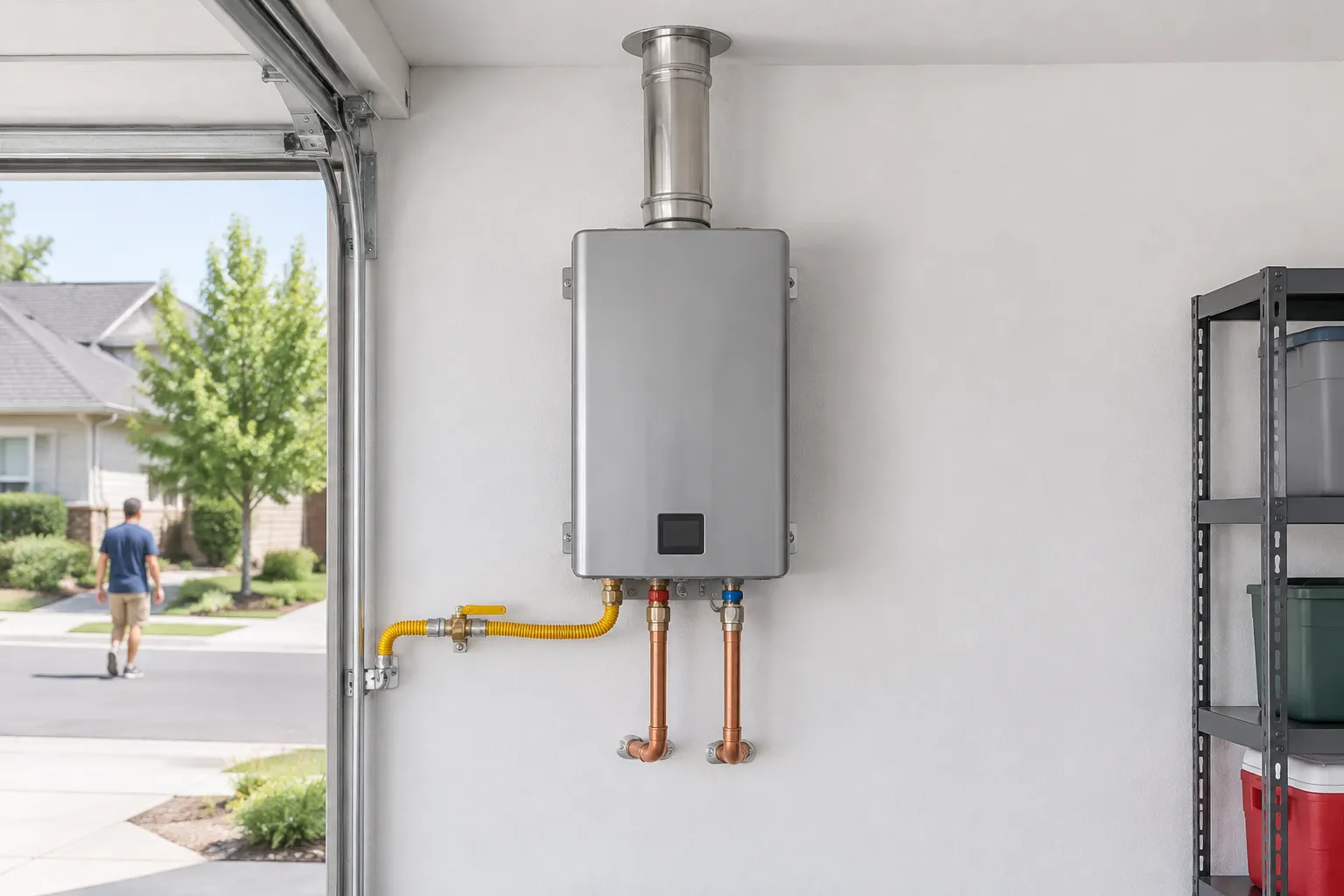
For a plumber, a tankless install is routine but not simple, and it is rarely a like-for-like swap. Replacing a tank usually means a bigger gas line, a different vent, new water connections with isolation valves, a condensate drain for condensing models, and a power outlet for the controls. Do-it-yourself work on gas lines and vents is where mistakes turn dangerous.
The steps are roughly these:
- Size the unit by peak flow in gallons per minute and the temperature rise from your incoming water.
- Check the gas meter and pipe capacity, or the electrical panel for electric units.
- Mount the unit on the wall, indoors or outdoors.
- Run the vent, using the material and clearances the manufacturer specifies.
- Connect the cold and hot water with service valves for annual flushing, plus the pressure relief arrangements the code and manufacturer call for.
- Connect gas or power, a condensate drain if required, and test combustion and flow.
- Pass the inspection when a permit applies.
Most plumbers allow one full day, and a move to a new wall or a new vent route can add time.
What does tankless water heater installation cost in Sacramento?
This Old House puts a tankless unit installed at $2,100 to $4,000, with an average of about $2,800. Fixr's tankless guide (updated January 2025) lists gas at $1,400 to $3,500 and electric at $1,000 to $3,000. The price covers the heater, labor, vent, fittings, permit and disposal of the old tank. The plumber quotes the real figure after seeing the home.
| What changes the price | Typical effect |
|---|---|
| Gas line upgrade to a larger pipe | Often a few hundred to over a thousand dollars |
| New venting through a wall or roof | Adds cost, more if the route is long |
| Electrical service for an electric unit | Whole-house electric models can need large circuits and a panel upgrade |
| Condensing or non-condensing | Condensing units cost more and need a drain |
| Unit size and brand | Higher flow rates cost more |
| Relocating from the old tank spot | Adds pipe and labor |
| Permit and inspection | Fees apply for new or replacement water heaters in the City of Sacramento |
For a full comparison of equipment and installed prices, see tankless water heater cost and the cost of an on-demand water heater. If the gas pipe needs work, gas line installation cost explains that part of the bill.
Does a tankless install need a permit in Sacramento?
Yes in general. The City of Sacramento lists building permit and related fees for residential water heater new or replacement work, and a gas tankless unit also involves gas piping and venting that an inspector reviews. County and other nearby jurisdictions have their own permit offices, so ask the plumber who pulls the permit and for the final sign-off.
A permit protects you. The inspection checks the gas connection, the vent, the relief valve discharge and the seismic bracing where it applies. Be cautious of anyone who suggests skipping it. In California, a contractor needs a license for work of $1,000 or more in labor and materials, and plumbing falls under the C-36 classification. You can verify a number on the California Contractors State License Board site before you sign.
What does a tankless water heater need: venting, gas and power?
Gas tankless units need a vent rated for the unit, combustion air and a gas line sized for the burner's full input, which is often 150,000 to 199,000 BTU per hour for a whole-house model, far above a typical tank. Electric units need heavy dedicated circuits. Condensing models vent through plastic pipe and drain acidic condensate.
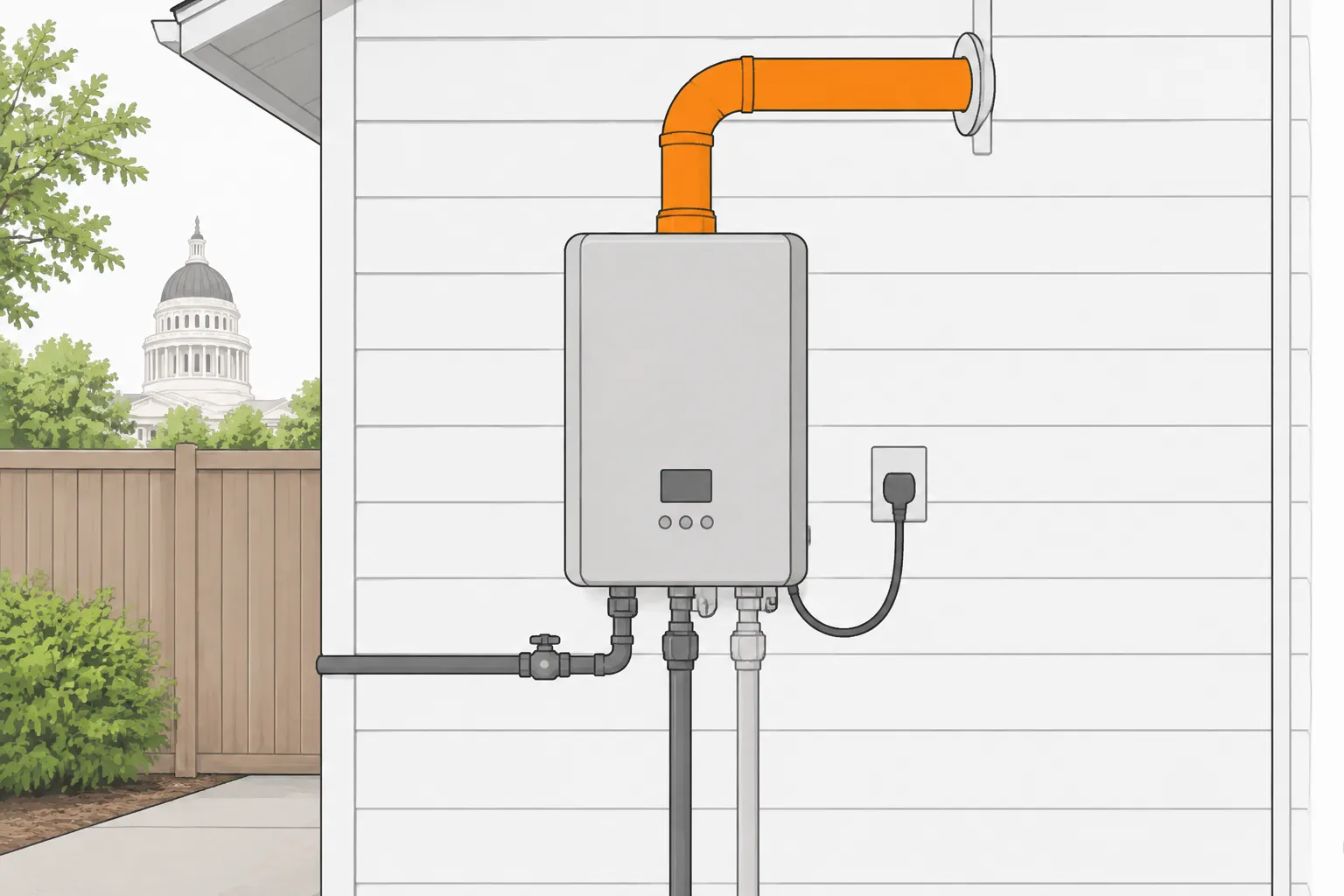
Venting rules differ by unit. Non-condensing gas models usually use stainless steel vent and run hot. Condensing models run cooler, use approved plastic vent and need a condensate drain, sometimes with a neutralizer. Always follow the manufacturer's installation manual, which the inspector will use.
Outdoor models exist and suit mild climates like Sacramento's, since they save indoor wall space and shorten the vent. Their built-in freeze protection is generally enough for our occasional frost nights, but exposed water lines should be insulated. Indoor installs in a garage need the same clearances and bracing as any other gas appliance.
If you run propane, a small cylinder will not keep a whole-house unit going. A 20 pound cylinder holds roughly 430,000 BTU of fuel, so a unit firing at 150,000 to 199,000 BTU per hour can empty it in a few hours of heavy use. Whole-house propane tankless units need a larger supply tank, and the installer sizes the regulator and line.
What are the benefits of a tankless water heater?
The main benefits are lower standby loss, a longer service life and a smaller footprint. For gas models, the U.S. Department of Energy says demand water heaters can be 24% to 34% more energy efficient than storage tanks in homes that use 41 gallons or less of hot water a day, and 8% to 14% in homes that use around 86 gallons. The Department of Energy puts tankless life at up to 20 years.
Other benefits: hot water does not run out during a long shower, since the unit heats on demand, and the heater uses wall space instead of floor space. The importance of correct sizing cannot be overstated. A small unit on a large household will give lukewarm water when several taps open.
What is the downside of tankless water heaters?
Higher upfront cost, a more complicated install and limits on simultaneous use. Whole-house gas units often need a bigger gas line and new venting. Hard-water scale can clog the heat exchanger without annual descaling. There can be a short cold-water delay at the tap, and a unit that is undersized will not keep up with several outlets at once.
Maintenance matters. Flush the unit yearly with vinegar or a descaling solution through the service valves. Our guide on how to flush a water heater covers the principle for tanks, and tankless descaling follows the maker's manual. If hardness is a problem at your address, a water softener may help the heat exchanger last. Many plumbing technicians like tankless units for their lifespan and efficiency, but they dislike installs where the home was never set up for the gas or vent they need.
Can you run two showers with a tankless water heater?
Often yes, if the unit is sized for it. A typical shower uses about 2 gallons per minute, and a whole-house gas unit commonly delivers 5 to 10 gallons per minute at a modest temperature rise. Two showers and a running dishwasher at once can exceed a smaller unit. Sacramento's warm summer groundwater helps, but winter incoming water is colder, so size for winter.
Ask the plumber to calculate flow in gallons per minute at your coldest incoming water temperature. Electric units have a lower flow limit than gas, which is why whole-house electric models draw so much power. Some homes use two units, or a small point-of-use unit for a far bathroom.
Is there still a federal tax credit for tankless water heaters in 2026?
No. The federal energy efficient home improvement credit, known as 25C, ended at the end of 2025, according to the IRS. Qualifying equipment placed in service in 2025 could still be claimed on that year's return. Local utility and state rebates are separate programs, so check them before you buy.
Rules change often, so check the IRS site and ask a tax professional about prior-year claims. For gas tankless units, the biggest financial lever now is simply the installed price. See the water heater replacement cost guide if you want to compare against a standard tank, or the direct comparison in tank vs tankless water heaters.
For more topics, start at the Sactown Plumbing Guide.
Questions people ask
What is the downside of a tankless water heater?
The downsides are higher installed cost, a bigger gas line and new venting in many homes, scale build-up in hard water that needs yearly flushing, and a limit on how many fixtures can run at once. Electric whole-house units may need a panel upgrade. If your house needs little change, those costs shrink.
How long will a 20lb propane tank last on a tankless water heater?
Not long on a whole-house unit. A 20 pound cylinder holds roughly 430,000 BTU, and a unit running at 150,000 to 199,000 BTU per hour can use it up in a few hours of heavy use. Barbecue cylinders are not meant for this. A tankless unit on propane needs a properly sized tank and regulator.
Why do plumbers dislike tankless water heaters?
Some do not, but common complaints are installs in homes not built for them, undersized gas lines, hard-water scale that customers never flush, and homeowners expecting unlimited hot water from a small unit. When sizing, venting and maintenance are done right, many plumbers are comfortable with tankless. Ask the plumber you hire how many they install each year.
Read on
- On demand heater cost
What an on demand water heater costs in Sacramento: converting from a tank, gas versus electric running costs, and sizing against a…
- Tank vs tankless
Tank or tankless water heater for your Sacramento home?
- Tankless heater cost
Tankless water heater cost in Sacramento: installed price ranges for gas, electric and propane, what pushes the price up, and how to…
Sources used
- U.S. Department of Energy, tankless or demand-type water heaters
- City of Sacramento building permit fees for water heaters
- California Contractors State License Board, hiring a contractor
- How Much Does Water Heater Installation Cost, This Old House (updated June 2026)
- Tankless Water Heater Installation Cost, Fixr (updated January 2025)
Last changed