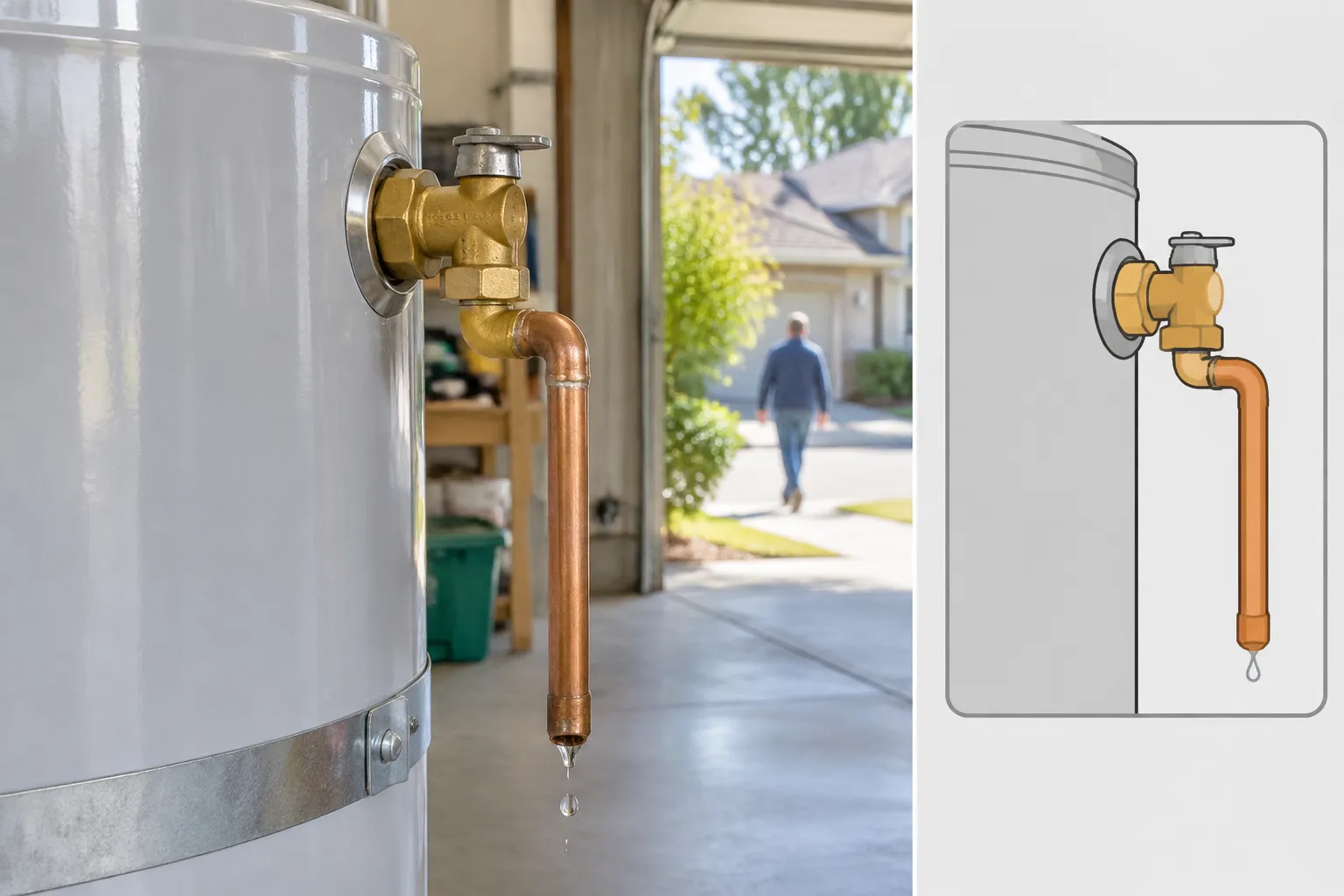
The temperature and pressure relief valve, often called the TPR valve, opens if the water in a tank gets too hot or the pressure too high. Replacing a worn one is a short job, which Fixr's water heater repair guide (updated August 2025) lists at $100 to $250 with a plumber. Never cap or plug it. For the other common repairs, see water heater repair and replacement.
What does a water heater pressure relief valve do?
The relief valve is a spring-loaded safety valve on the tank, usually near the top or on the side. If pressure or temperature rises past its rating, it opens and releases water through a discharge pipe so the tank cannot rupture. It is the last safeguard if a thermostat or burner fails.
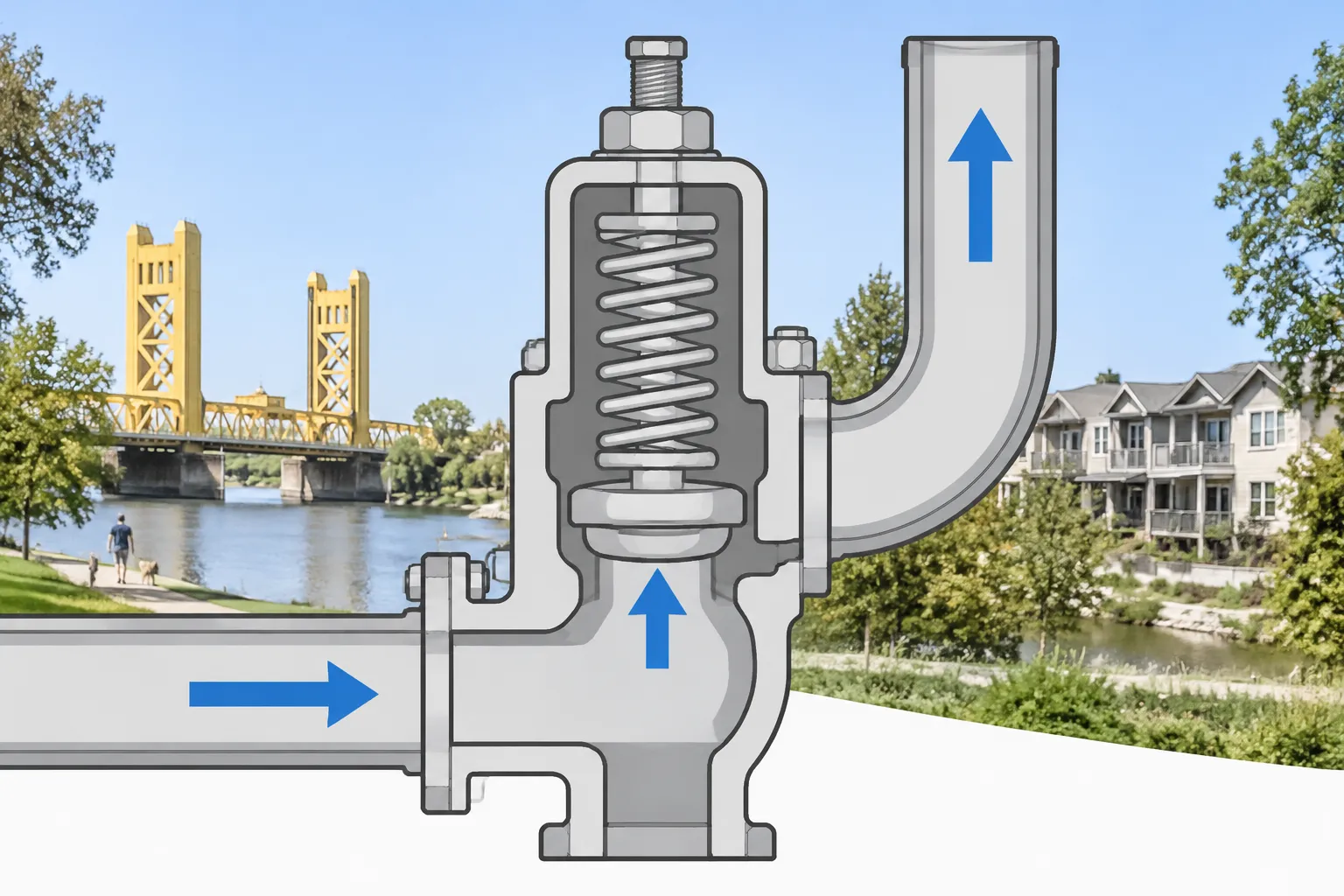
The valve is rated for a set pressure and temperature, and the California Plumbing Code says its discharge capacity must not be less than the heater's input rating. The label on the valve and the tank's data plate show the ratings. A valve with the wrong rating is a safety fault, so use the part the manufacturer or plumber specifies.
The valve is not meant to run. A working valve is closed almost all the time, and a discharge pipe that drips or runs means something is wrong. Read our page on a leaking water heater to tell a valve leak from a tank leak.
Why is my pressure relief valve dripping or leaking?
A dripping relief valve usually means one of three things: the valve is worn or has debris on its seat, your plumbing is building up pressure that has nowhere to go (thermal expansion), or the water or incoming supply pressure is too high. A plumber can tell which with a gauge and a short visit.
- Worn valve. Valves older than about 5 to 10 years, or used heavily, can stop sealing. Mineral deposits on the seat cause a slow drip.
- Thermal expansion. In a closed system, such as one with a backflow device or pressure regulator at the meter, heated water expands and pressure climbs. An expansion tank on the cold line takes up the extra volume. If the valve drips only while the heater is heating, this is likely.
- High supply pressure. A failing pressure regulator can overpressure the whole house. A gauge on a hose bib shows it. Many plumbing guides suggest keeping household pressure under about 80 psi.
- Overheating. If the thermostat has failed and the water is very hot, the valve is doing its job. Turn the heater off and call a plumber the same day.
If water is running steadily and is very hot, keep away from the pipe and turn off the heater's power or gas. Scalding is a real risk. See emergency water heater repair.
Can I replace a water heater relief valve myself?
Some homeowners do, and manufacturers' manuals describe the steps, but it involves draining part of the tank, working beside a gas or electric appliance, and getting the discharge piping right. Most households choose to hire a local plumber, especially if the valve is old, corroded or stuck on the tank.
California requires a contractor with a CSLB license for jobs of $1,000 or more in labor and materials, which a small valve swap does not reach. Even so, the discharge piping and relief valve rules are part of the plumbing code, and a replacement tank must have a correct valve and pipe to pass the City of Sacramento inspection. A mistake here is a safety fault.
If you do the swap yourself, the usual steps from manuals are:
- Turn off the power or set the gas control to pilot, then close the cold inlet.
- Open a hot tap and drain a few gallons so the water level is below the valve.
- Disconnect the discharge pipe and unscrew the old valve.
- Wrap the threads of the new valve with thread seal tape or compound, as the valve maker says, and tighten.
- Reconnect the discharge pipe, refill the tank, check for leaks, then restore power.
Do not use a valve with a different pressure rating from the one the tank calls for.
What are the rules for the discharge pipe?
The discharge pipe carries water from the valve to a safe spot, and it must not be capped, plugged or fitted with a valve. It usually runs downward at full valve size to a floor drain, a drip pan drain, or outdoors, ending where hot water cannot hurt anyone. Local code decides the details, so the plumber applies them.
Common requirements in plumbing codes and manuals: the pipe is at least the size of the valve outlet, drains by gravity with no valve or trap in it, and ends a short distance above the drain or ground with no threads on the end. Never thread the end, because a cap would defeat the valve. If your pipe ends in the middle of a room or is capped, call a plumber.
If the valve and its pipe are both fine and the tank is rusty, the answer may be a new unit; see water heater replacement cost.
How much does it cost to replace a pressure relief valve?
Fixr's water heater repair guide lists $100 to $250 for a pressure relief valve replacement, depending on access and whether an expansion tank is added. Fixr's 40-gallon water heater guide lists an expansion tank at $150 to $400. A plumber's quote should show the valve, the labor and any tank in separate lines.
| Item | Typical range |
|---|---|
| Valve replacement by a plumber | $100 to $250 |
| Expansion tank added | $150 to $400 |
These ranges come from Fixr, Sacramento prices vary, and a local specialist quotes the real price. A replacement is a good moment to flush the tank; see how to flush a water heater. Use the homepage to browse more guides.
How often should a relief valve be tested?
Many manuals say to test it once or twice a year by lifting its lever briefly and letting a little water flow into a bucket. The valve should discharge and then close with no drip. If it sticks, does not flow, or drips afterward, replace it. Keep your hands and face away from the pipe: the water is hot.
A valve that has never been tested may fail to reseat when lifted, and you then need a replacement, which is exactly what the test is meant to find out. A plumber can test it during a yearly service. See how long a water heater lasts.
Questions people ask
How long does it take to replace a water heater pressure relief valve?
Usually 30 minutes to an hour for the valve, plus time to drain and refill the tank. A plumber often finishes in one visit of about an hour or two. Adding an expansion tank takes a little longer.
What should I ask before I hire someone to replace a relief valve?
Ask whether the quote includes the valve, discharge pipe corrections and an expansion tank if needed. Ask for the CSLB license number and check it online, and ask whether they will check your water pressure with a gauge.
Do I need to be home for the replacement?
Someone should be there to give access and see the work. The water heater is off for an hour or two, and you will have cold water at the tap during the job.
Can I plug a dripping relief valve?
No. Plugging or capping the valve or its pipe removes the heater's last safety device, and a tank that overheats or over-pressurizes can rupture. Replace the valve and fix the cause of the drip instead.
Sources used
- Manufacturer owner's manuals for tank water heaters (relief valve and discharge pipe sections), reviewed November 2026
- City of Sacramento water heater permit and fee page
- California Health and Safety Code section 19211 (water heater bracing)
- Contractors State License Board
- Water Heater Repair Cost, Fixr (updated August 2025)
- Cost to Replace a 40-Gallon Water Heater, Fixr (updated January 2026)
Last changed